Shopping Cart



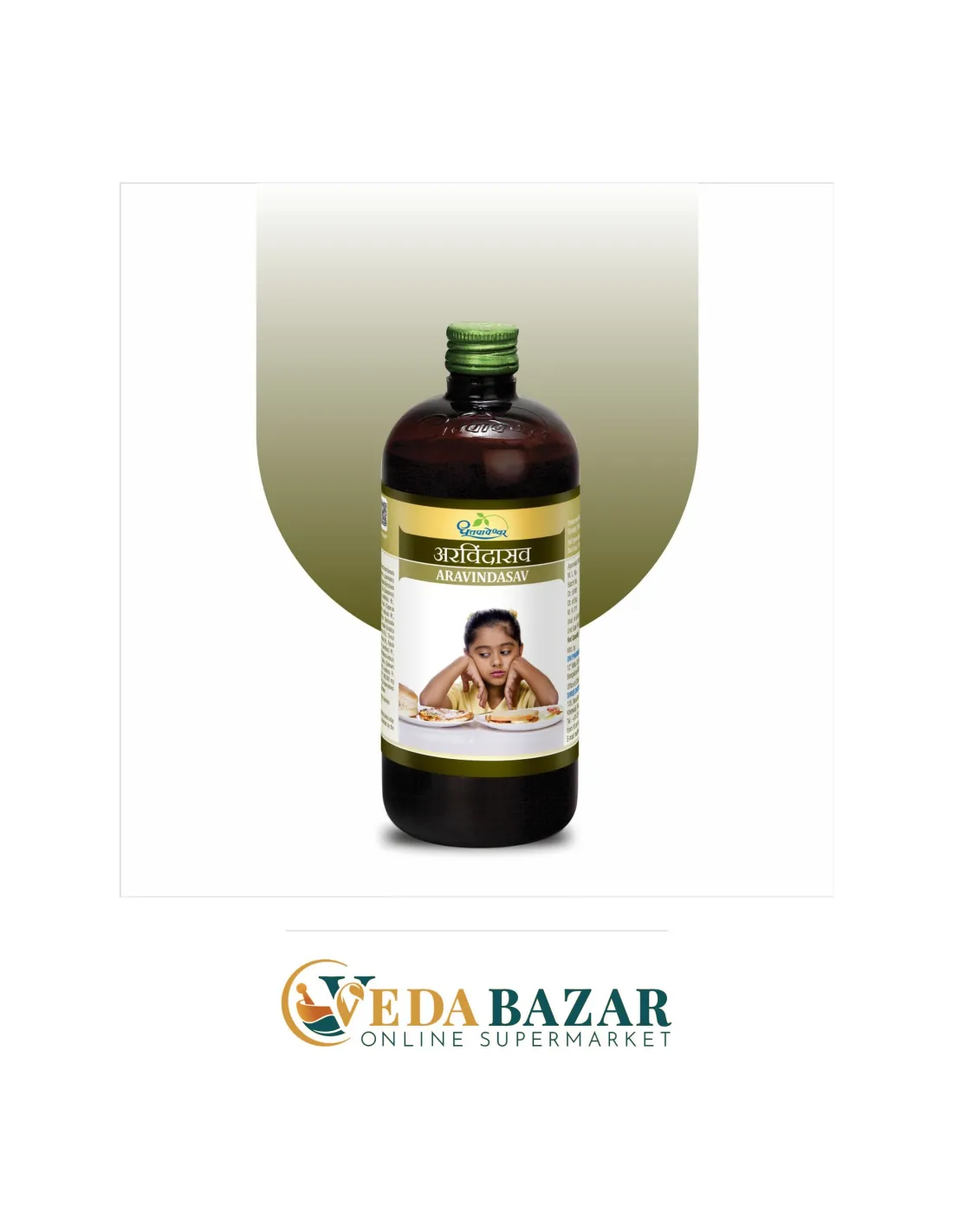
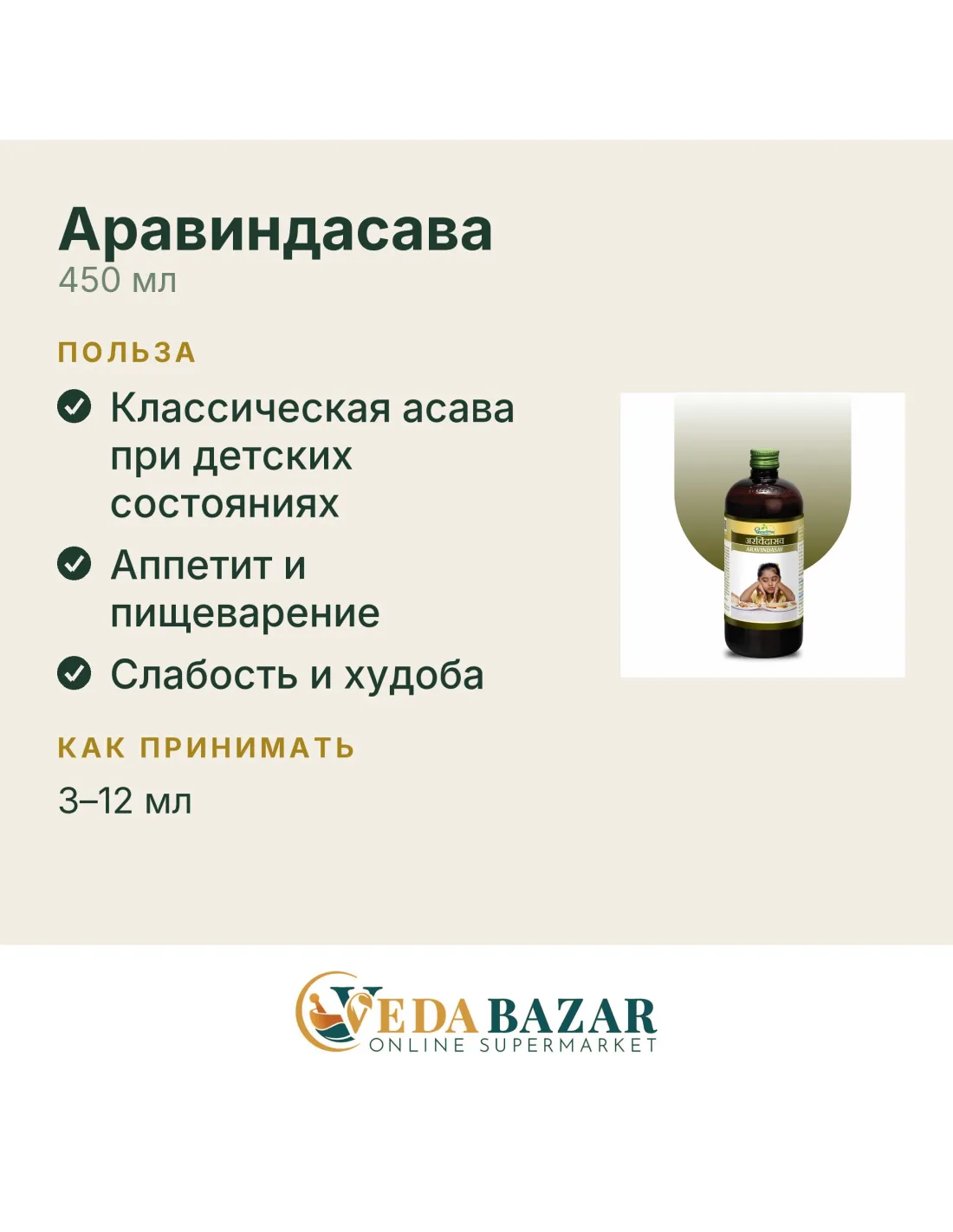
Aravindasava, 450 ml

in stock
₽320.00
Tax included
For children
· A classical asava for children’s conditions
· Appetite and digestion
· Weakness and thinness
· Lotus, vetiver, grape, liquorice
· 450 ml
What is Aravindasava?
Aravindasava is a classical fermented asava for children. “Aravinda” is the lotus; besides it there are vetiver, water lily, bala, jatamansi, vacha, manjishtha, triphala, liquorice and other herbs – more than twenty, and fermentation is with grapes, dhataki flowers, sugar and honey.
The manufacturer describes it in bala-rogas – children’s conditions: weak agni, no taste for food, weakness, thinness and wasting (balakshaya). Classically it is also linked with phakka (a child slow in development and late to walk), bone curvature, increased body heat, constipation and heavy sweating.
In Ayurveda children have strong Kapha and a delicate agni, and with heat and weakness Pitta joins in. Cooling lotus and vetiver calm the heat, while digestive herbs gently wake the appetite. Like all arishtams and asavas it contains a little natural alcohol formed during fermentation. For children – only as prescribed by an Ayurvedic doctor.
Key ingredients
Kamala / aravinda (lotus) – the main herb: cools, calms, nourishes.
Ushira (vetiver) and utpala (water lily) – relieve heat and sweating.
Bala (Sida cordifolia) – gives strength, nourishes the tissues.
Jatamansi and vacha – calm the mind and nervous system.
Triphala and trivrut – gently cleanse the bowel, help with constipation.
Grape, liquorice, honey – nourish and soften, make the taste pleasant.
Who is it for?
Appetite: the child eats poorly
Digestion: weak agni, constipation
Strength: weakness, thinness
Heat: runs hot, sweats heavily
Growth: slow development – as prescribed by a doctor
«Lotus – for a child’s delicate agni»
Effect on the doshas
 Vata calmed: nourishes |
 Pitta calmed: cools |
 Kapha neutral |
How to take
As prescribed by an Ayurvedic doctor. Per the manufacturer: 3–12 ml (0.5–2 teaspoons) twice a day.
If you are pregnant, breastfeeding, have a chronic condition or take medication – talk to your doctor first.
Contraindications: Contains a little natural alcohol from fermentation: for children – only as prescribed by an Ayurvedic doctor, who will choose the dose by age.
Why we chose Dhootapapeshwar
Sadly, many Ayurvedic products in India are made from poor raw material. That is why Vedabazar works only with trusted makers. Shree Dhootapapeshwar was founded in 1872 by the Ayurvedic physician Krushnashastri Puranik (company data) – one of the oldest Ayurvedic companies in India; classical formulas follow the Ayurvedic texts strictly.
Product details
| Quantity | 450 ml |
| Form | asava |
| Maker | Shree Dhootapapeshwar, India |
| Storage | in a cool dry place |
This information is for reference only and does not replace medical advice.
- Need
- Digestion and detox
Energy and vitality - Dosha
- Pitta
Vata
dhn5068
500 Items
Shipping from India – EMS, courier to your door
- We pack and ship your order within 7 working days and email you the tracking number – it is also in your account. Rare and made-to-order products may take longer – check the time when placing the order.
- Delivery takes 2–3 weeks on average, depending on customs and the post in your country.
- The EMS courier brings the parcel to your home and calls in advance – please add your phone number.
- Shipping is calculated by order weight and shown in the cart: from 1 420 ₽ for a parcel up to 250 g. The bigger the order, the cheaper each 100 g of shipping.
- If there is no EMS service in your country, the parcel is delivered by your national post.
- Up to 5 kg in one parcel.
More about shipping and customs · Questions – message us on Telegram
Each 10 ml contains extract of:
| Kamala (lotus flower) (Nelumbium speciosum) | 16.293 mg |
| Ushira (vetiver) (Vetiveria zizanioides) | 16.293 mg |
| Gambhari (fruit) (Gmelina arborea) | 16.293 mg |
| Utpala (water lily flower) (Nymphaea stellata) | 16.293 mg |
| Manjishtha (Rubia cordifolia) | 16.293 mg |
| Ela sookshma (cardamom) (Elettaria cardamomum) | 16.293 mg |
| Bala (root) (Sida cordifolia) | 16.293 mg |
| Jatamamsi (Nardostachys jatamansi) | 16.293 mg |
| Musta (Cyperus rotundus) | 16.293 mg |
| Sariva shveta (Hemidesmus indicus) | 16.293 mg |
| Haritaki (Terminalia chebula) | 16.293 mg |
| Bibhitaka (Terminalia belerica) | 16.293 mg |
| Vacha (Acorus calamus) | 16.293 mg |
| Amalaki (amla) (Emblica officinalis) | 16.293 mg |
| Karchoora (Curcuma zedoaria) | 16.293 mg |
| Trivrut (root) (Ipomoea turpethum) | 16.293 mg |
| Nili (root) (Indigofera tinctoria) | 16.293 mg |
| Patola (leaf) (Trichosanthes dioica) | 16.293 mg |
| Parpata (Fumaria parviflora) | 16.293 mg |
| Arjuna (bark) (Terminalia arjuna) | 16.293 mg |
| Madhooka (flower) (Madhuca indica) | 16.293 mg |
| Yashti (liquorice) (Glycyrrhiza glabra) | 16.293 mg |
| Mura (root) (Selinum candollei) | 16.293 mg |
| Draksha (grape) (Vitis vinifera) | 325.866 mg |
| Dhataki (flowers) (Woodfordia fruticosa) | 260.692 mg |
| Sharkara (sugar) (–) | 1629.328 mg |
| Madhu (honey) (–) | 814.664 mg |
Comments (0)
No customer reviews for the moment.
Tap to zoom