Shopping Cart



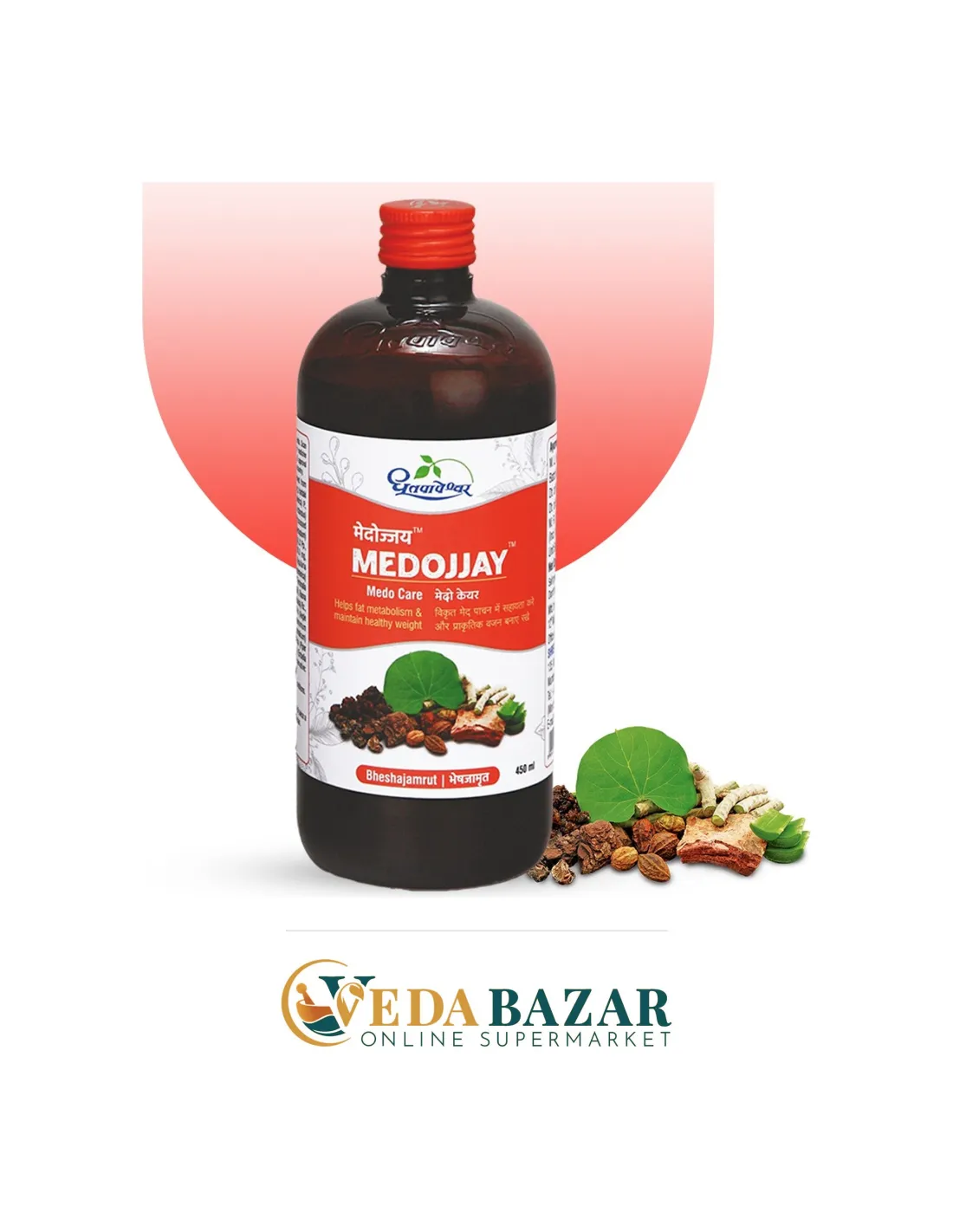
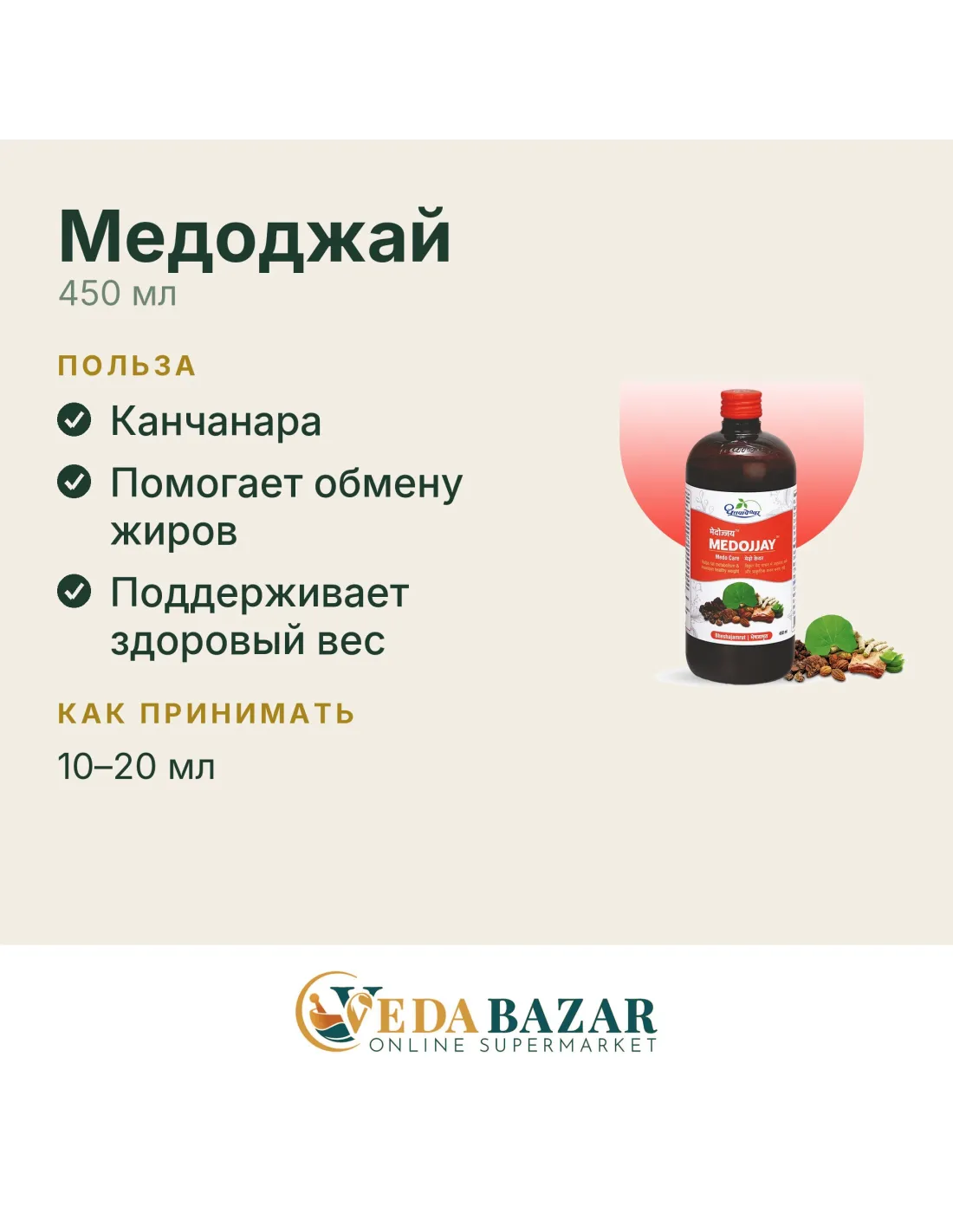
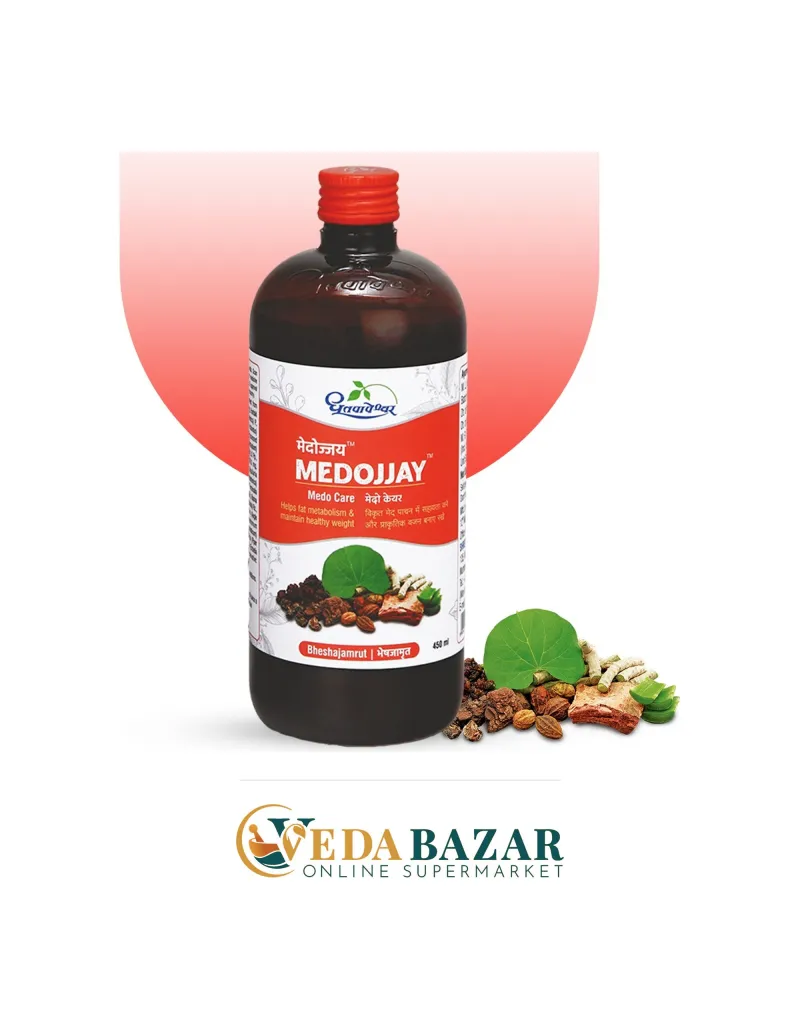
Medojjay, 450 ml

in stock
₽460.00
Tax included
Fat metabolism and weight
· Kanchanara, triphala, guggul and 20 more herbs
· Helps fat metabolism (meda dhatu)
· Supports a healthy weight
· Helps liver function
· 450 ml
What is Medojjay?
Medojjay is a proprietary Dhootapapeshwar liquid formula from the Bheshajamrut line: a fermented preparation of more than twenty-five herbs. The main herb is kanchanara (1000 mg per 10 ml), with triphala, musta, purified guggul, asana, kumari (aloe), dhataki, arjuna, lodhra, trikatu and others.
The manufacturer describes it as support for healthy fat metabolism and weight: it helps regularise abnormal fat metabolism, maintains a healthy weight and helps in metabolic disorders by improving liver function and kindling meda dhatvagni – the “fire” of fat tissue. Indications: helps metabolise excess meda (fat), santarpanjanya vikara – conditions of over-nourishment.
In Ayurveda excess weight is most often Kapha and a weak fire of meda dhatu. Kanchanara and guggul “scrape” the excess, triphala gently cleanses, the spices kindle agni. The remedy works together with lifestyle – light warm food, movement, not eating “without hunger”. Like arishtams and asavas it contains a little natural alcohol formed during fermentation. Taken as prescribed by a doctor.
Key ingredients
Kanchanara (Bauhinia variegata) – the main herb: “scrapes” the excess, supports glands and lymph.
Guggul (Commiphora wightii) – purified resin: helps fat and cholesterol metabolism.
Triphala (haritaki, bibhitaki, amla) – gently cleanses the bowel, supports metabolism.
Asana (Pterocarpus marsupium) – a classical herb for metabolism and sugar balance.
Musta (Cyperus rotundus) – kindles agni, removes stagnation.
Who is it for?
Weight: excess weight, slow metabolism
Fat metabolism: support needed, as prescribed by a doctor
Liver: sluggish, heaviness
Kapha: heaviness, sluggishness, drowsiness after food
«Excess weight leaves when the fire of the tissues is kindled»
Effect on the doshas
 Vata neutral |
 Pitta neutral |
 Kapha reduced: scrapes the excess |
How to use
As prescribed by an Ayurvedic doctor. Per the manufacturer: 10–20 ml (2–4 teaspoons) twice a day with lukewarm water. Like arishtams and asavas it contains a little natural alcohol formed during fermentation.
If you are pregnant, breastfeeding, have a chronic condition or take medication – talk to your doctor first.
Contraindications: Contains a little natural alcohol from fermentation – not suitable in alcohol dependence.
Why we chose Dhootapapeshwar
Sadly, many Ayurvedic products in India are made from poor raw material. That is why Vedabazar works only with trusted makers. Shree Dhootapapeshwar was founded in 1872 by the Ayurvedic physician Krushnashastri Puranik (company data) – one of the oldest Ayurvedic companies in India; classical formulas follow the Ayurvedic texts strictly.
Product details
| Quantity | 450 ml |
| Form | fermented liquid (bheshajamrut) |
| Maker | Shree Dhootapapeshwar, India |
| Storage | in a cool dry place |
This information is for reference only and does not replace medical advice.
- Need
- Digestion and detox
- Dosha
- Kapha
dhn5009
500 Items
Shipping from India – EMS, courier to your door
- We pack and ship your order within 7 working days and email you the tracking number – it is also in your account. Rare and made-to-order products may take longer – check the time when placing the order.
- Delivery takes 2–3 weeks on average, depending on customs and the post in your country.
- The EMS courier brings the parcel to your home and calls in advance – please add your phone number.
- Shipping is calculated by order weight and shown in the cart: from 1 420 ₽ for a parcel up to 250 g. The bigger the order, the cheaper each 100 g of shipping.
- If there is no EMS service in your country, the parcel is delivered by your national post.
- Up to 5 kg in one parcel.
More about shipping and customs · Questions – message us on Telegram
Each 10 ml contains extract derived from:
| Kanchanara (Bauhinia variegata) | 1000 mg |
| Haritaki (Terminalia chebula) | 200 mg |
| Bibhitaki (Terminalia belerica) | 200 mg |
| Amalaki (amla) (Emblica officinalis) | 200 mg |
| Musta (Cyperus rotundus) | 200 mg |
| Shodhit guggulu (guduchi shodhit) (Commiphora wightii) | 200 mg |
| Asana (Pterocarpus marsupium) | 200 mg |
| Kumari (aloe) (Aloe vera) | 100 mg |
| Dhataki (Woodfordia fruticosa) | 100 mg |
| Daruharidra (Berberis aristata) | 50 mg |
| Agaru (Aquilaria agallocha) | 50 mg |
| Indrayava (Holarrhena antidysenterica) | 50 mg |
| Yashti (liquorice) (Glycyrrhiza glabra) | 50 mg |
| Arjuna (Terminalia arjuna) | 50 mg |
| Lodhra (Symplocos racemosa) | 50 mg |
| Rasna (–) | 50 mg |
| Karchoora (Curcuma zedoaria) | 50 mg |
| Ushira (vetiver) (Vetiveria zizanioides) | 50 mg |
| Bilva (Aegle marmelos) | 50 mg |
| Tvak (cinnamon) (Cinnamomum zeylanicum) | 25 mg |
| Lavanga (clove) (Syzygium aromaticum) | 25 mg |
| Shunthi (ginger) (Zingiber officinale) | 25 mg |
| Maricha (black pepper) (Piper nigrum) | 25 mg |
| Pippali (Piper longum) | 25 mg |
| Vidanga (Embelia ribes) | 25 mg |
| Guda (jaggery) (–) | q.s. |
Comments (0)
No customer reviews for the moment.
Tap to zoom