Shopping Cart



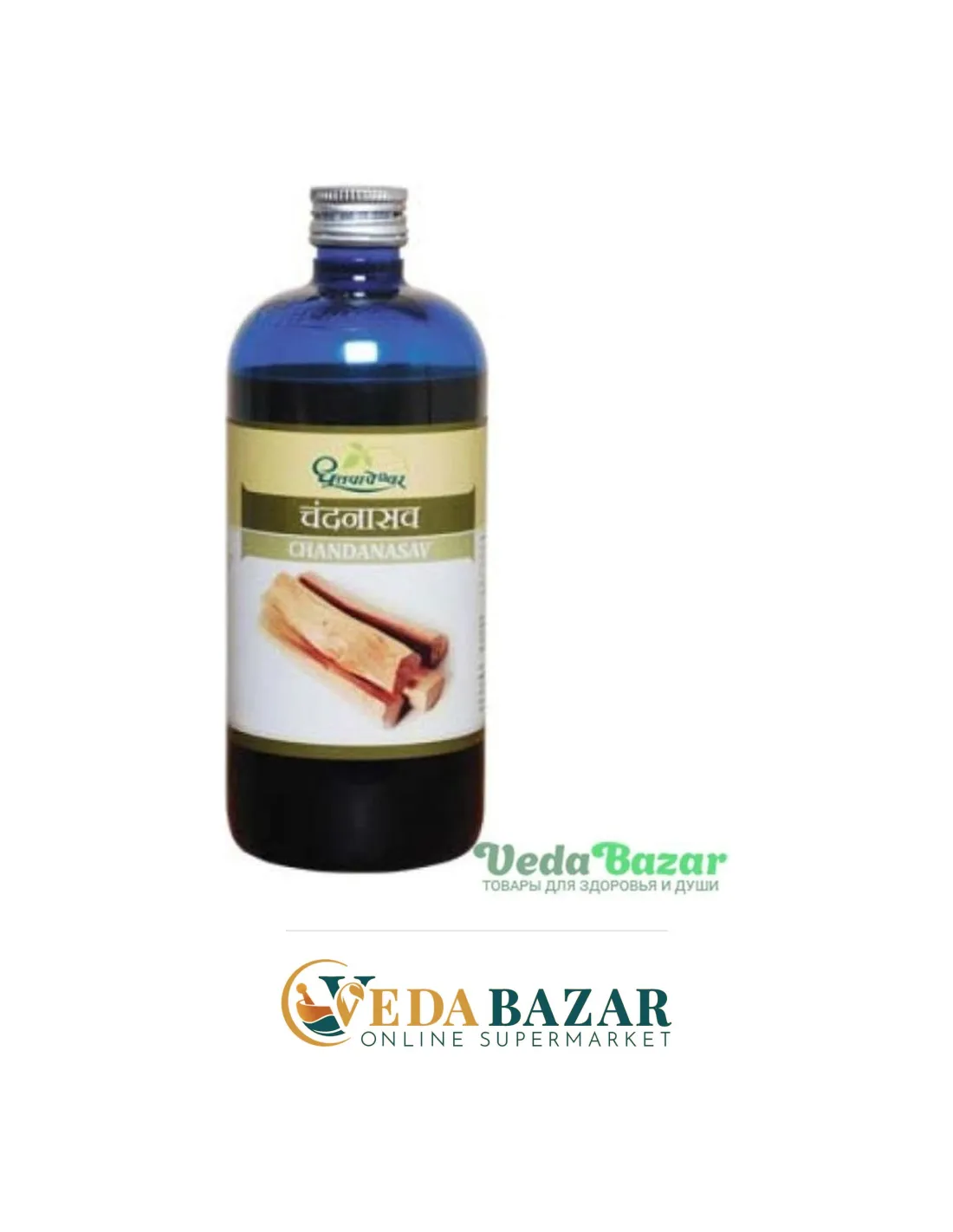
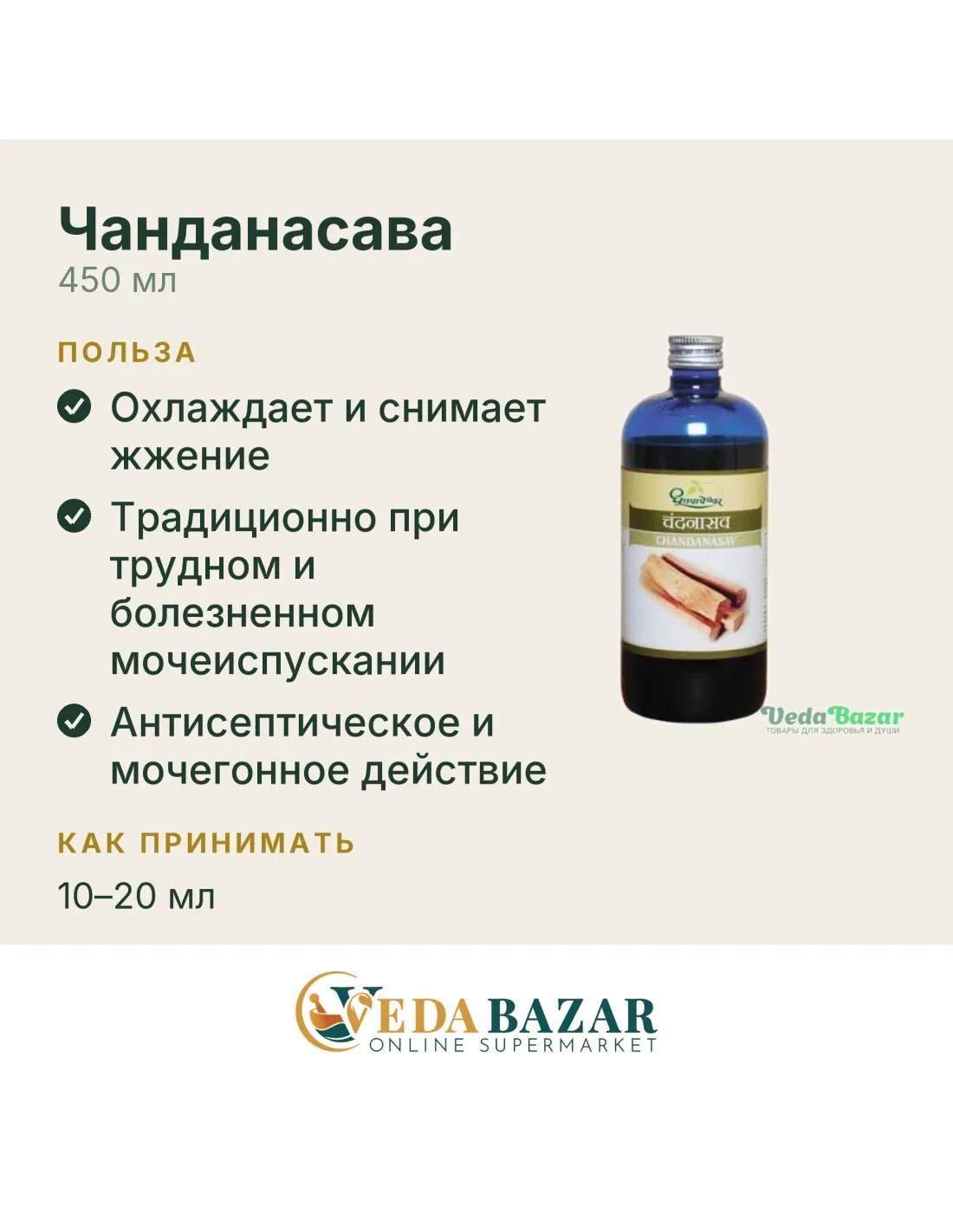
Chandanasava, 450 ml

in stock
₽650.00
Tax included
Kidneys and urinary tract
· Cools and relieves burning
· Traditionally for difficult and painful urination
· An antiseptic and diuretic action
· Sandalwood, shalmali, lodhra and other herbs
· 450 ml
What is Chandanasava?
Chandanasav is a very popular classical tonic in India by Dhootapapeshwar, made strictly according to the traditional canons: composition, look, taste and consistency follow the recipe. It is an asava – a medicinal herbal drink made by fermenting roots, bark, leaves, flowers and fruits, so it contains a little natural alcohol.
The manufacturer names its uses: difficult and painful urination (mootrakricchra), burning on urination (mootradaha), shukrameha, bleeding disorders (raktapitta), skin ailments, urticaria (sheetapitta), amlapitta (acidity), thirst and support for the heart (hridroga). The tradition notes an antiseptic and diuretic action: it reduces dysuria and burning on urination. The asava is used for haematuria, spermatorrhoea, leucorrhoea, urinary stones and inflammatory processes of the urogenital area.
In Ayurveda it is sweet, bitter and astringent and cooling. Sandalwood is the main coolant: it relieves burning and calms Pitta; the other herbs cleanse the blood and the urinary tract. Take the asava after meals diluted with water; during use plenty of warm water and cooling food without too much spice help.
Key ingredients
Chandana / sandalwood (Santalum album) – heartwood: cools and relieves burning, calms Pitta.
Gambhari / kasmarya (Gmelina arborea) – laxative, diuretic, supports lactation; for cystitis and urinary inflammation.
Nyagrodha / banyan (Ficus benghalensis) – bark: astringent, antiseptic, wound-healing; a tonic for the whole body.
Kiratatikta (Swertia chirayita) – a bitter herb: digestion, appetite, lowers acidity, for chronic fever and skin diseases.
Mocharasa (shalmali resin) and lodhra – astringent and cooling ingredients that stop bleeding and inflammation.
Who is it for?
Urination: burning, discomfort, urgency, difficulty
Kidneys and urinary tract: need gentle cooling support
Pitta: heat, acidity, thirst, irritated skin
Women’s health: leucorrhoea – as the doctor prescribes
Blood: bleeding tendency with excess Pitta
«Sandalwood is coolness for hot Pitta»
Effect on the doshas
 Vata neutral |
 Pitta calmed: cools heat and burning |
 Kapha neutral |
How to take
As prescribed by an Ayurvedic doctor. Usually: 10–20 ml (2–4 teaspoons) with an equal amount of water twice a day after meals.
If you are pregnant, breastfeeding, have a chronic condition or take medication – talk to your doctor first.
Why we chose Dhootapapeshwar
Sadly, many Ayurvedic products in India are made from poor raw material. That is why Vedabazar works only with trusted makers. Shree Dhootapapeshwar was founded in 1872 by the Ayurvedic physician Krushnashastri Puranik (company data) – one of the oldest Ayurvedic companies in India; classical formulas follow the Ayurvedic texts strictly.
Product details
| Quantity | 450 ml |
| Form | asava |
| Maker | Shree Dhootapapeshwar, India |
| Storage | in a cool dry place |
This information is for reference only and does not replace medical advice.
- Need
- Kidneys and urinary tract
- Dosha
- Pitta
dh0043
29 Items
Shipping from India – EMS, courier to your door
- We pack and ship your order within 7 working days and email you the tracking number – it is also in your account. Rare and made-to-order products may take longer – check the time when placing the order.
- Delivery takes 2–3 weeks on average, depending on customs and the post in your country.
- The EMS courier brings the parcel to your home and calls in advance – please add your phone number.
- Shipping is calculated by order weight and shown in the cart: from 1 420 ₽ for a parcel up to 250 g. The bigger the order, the cheaper each 100 g of shipping.
- If there is no EMS service in your country, the parcel is delivered by your national post.
- Up to 5 kg in one parcel.
More about shipping and customs · Questions – message us on Telegram
Ingredients per the manufacturer:
| Chandan (sandalwood) (Santalum album) | 1 part |
| Pippali (Piper longum) | 1 part |
| Usheer (–) | 1 part |
| Kachora (–) | 1 part |
| Musta (Cyperus rotundus) | 1 part |
| Parpat (–) | 1 part |
| Gambhari moola (Gmelina arborea) | 1 part |
| Yashtimadhu (–) | 1 part |
| Kamal (–) | 1 part |
| Rasna (Pluchea lanceolata) | 1 part |
| Padmakashtha (–) | 1 part |
| Patol (–) | 1 part |
| Lodhra (Symplocos racemosa) | 1 part |
| Manjishtha (Rubia cordifolia) | 1 part |
| Kanchanar twak (Bauhinia variegata) | 1 part |
| Amra twak (–) | 1 part |
| Raktachandan (–) | 1 part |
| Mocharas (Bombax malabaricum) | 1 part |
| Patha (Cyclea peltata) | 1 part |
| Priyangu (–) | 1 part |
| Kirattikta (Swertia chirayita) | 1 part |
| Vata twak (Ficus benghalensis) | 1 part |
| Mrudvika (raisins) (–) | 20 parts |
| Guda (jaggery) (–) | q.s. |
| Dhataki pushpa (flowers) (Woodfordia fruticosa) | 16 parts |
| Sharkara (sugar candy) (–) | 100 parts |
Comments (0)
No customer reviews for the moment.
Tap to zoom