Shopping Cart



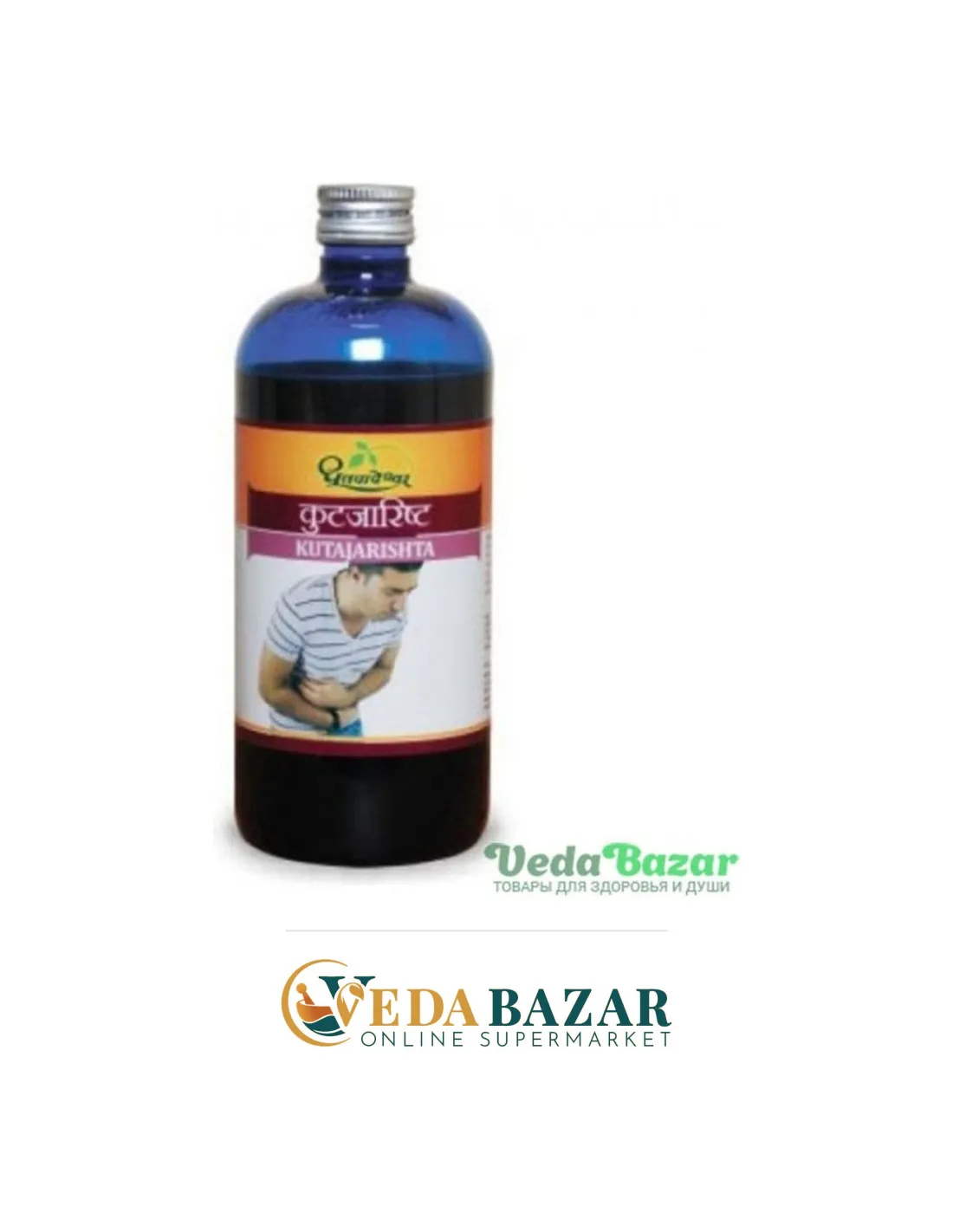
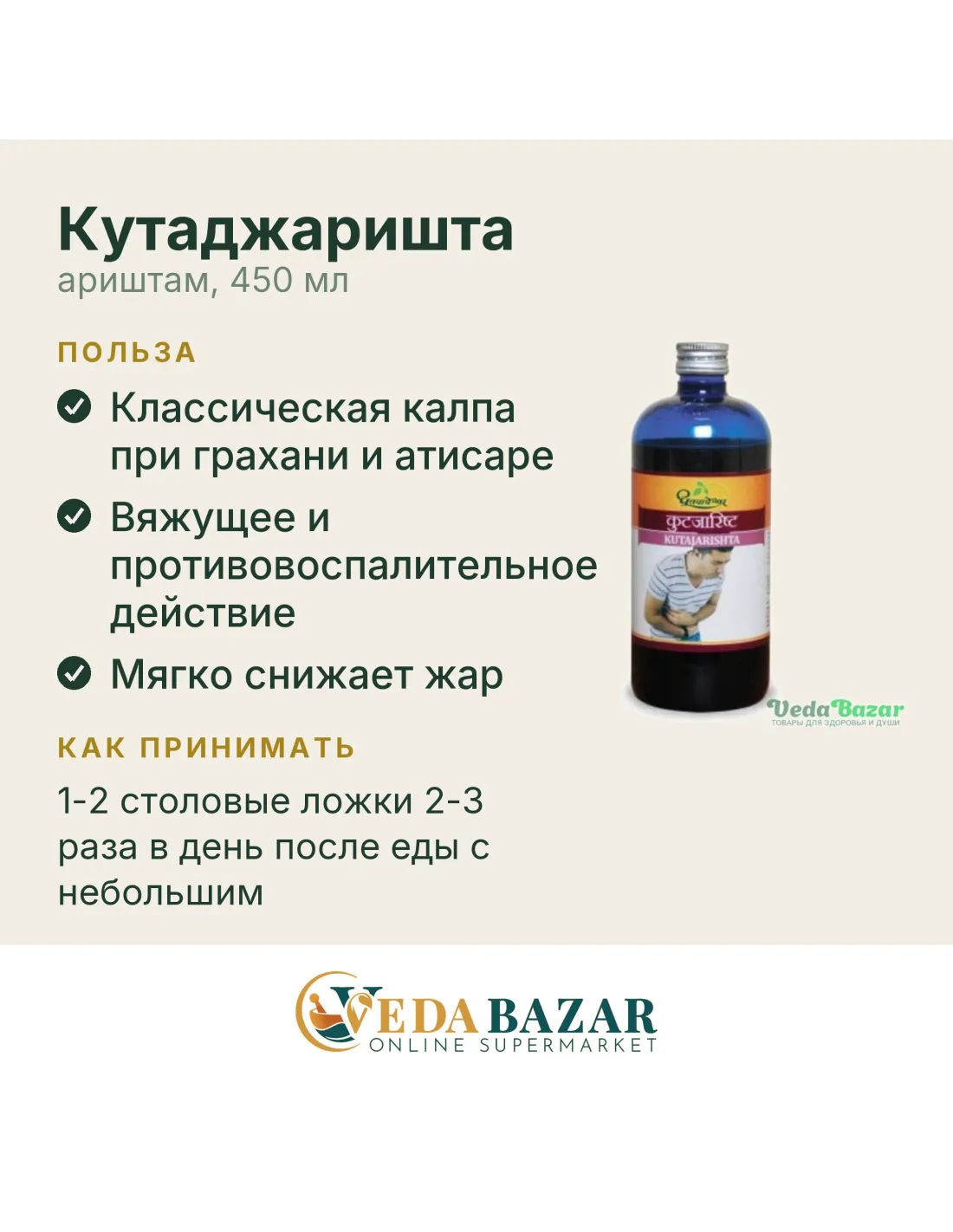
Kutajarishta, arishtam, 450 ml

in stock
₽750.00
Tax included
Bowel and stool
· A classical kalpa for grahani and atisara
· Astringent and anti-inflammatory
· Gently reduces heat
· Supports digestion
· 450 ml
What is Kutajarishta?
Kutajarishta is a classical fermented tonic that the manufacturer calls an excellent kalpa for grahani and atisara. It is traditionally used in atisara (frequent loose stools), raktatisara (with blood), jeernatisara (chronic), pravahika (with urgency and mucus), sangrahani and weakness of the bowel (antrashaithilya). It has a focused role in Ayurvedic bowel care where frequent or disturbed stools are part of the picture.
It is indicated in conditions of the digestive tract: diarrhoea, dysentery, ulcers and colitis, poisoning, nausea, bleeding in the bowel, Crohn’s disease (chronic inflammation of a part of the tract with fever and cramps) and sprue – protracted severe diarrhoea that exhausts the body. Kutajarishta is astringent and anti-inflammatory, improves the digestive tract and digestion in general and very gently lowers heat without harming the body. It is also used in fever, haemorrhoids and digestive problems.
In Ayurveda it is astringent and slightly bitter, cooling for the bowel – a formula for Pitta, when heat “burns” the bowel and stools are frequent. Like all arishtas it contains a little natural alcohol. Taken after meals, as prescribed by a doctor.
Key ingredients
Kutaja (Holarrhena antidysenterica, bark) – in Ayurveda the best remedy for dysentery and diarrhoea: antiseptic, anti-inflammatory, fever-reducing; also in colitis, haemorrhoids, spleen disorders and worms.
Draksha (dry grapes) – a nourishing, mildly laxative base that supports strength.
Gambhari (Gmelina arborea) – diuretic and laxative, traditionally for the urinary tract and lactation.
Madhooka (Madhuca indica) – a cooling, nourishing component of the formula.
Dhataki (Woodfordia fruticosa) – astringent in inflammation, helps the digestive tract and healing; starts fermentation.
Who is it for?
Stool: frequent loose stool, urgency, mucus
Bowel: colitis, inflammation, weakness of the bowel
Pitta: heat, inflammation, diarrhoea from heat
Digestion: gentle astringent support as prescribed by a doctor
«The bowel needs calm and warmth, and Pitta needs coolness»
Effect on the doshas
 Vata neutral |
 Pitta calmed: cools heat |
 Kapha neutral |
How to take
As prescribed by an Ayurvedic doctor. Usually: 1-2 tablespoons 2-3 times a day after meals with a little warm water (manufacturer: 10-20 ml with an equal amount of water).
If you are pregnant, breastfeeding, have a chronic condition or take medication – talk to your doctor first.
Contraindications: Mental disorders, constipation, alcoholism (contains a small amount of fermentation alcohol).
Why we chose Dhootapapeshwar
Sadly, many Ayurvedic products in India are made from poor raw material. That is why Vedabazar works only with trusted makers. Shree Dhootapapeshwar was founded in 1872 by the Ayurvedic physician Krushnashastri Puranik (company data) – one of the oldest Ayurvedic companies in India; classical formulas follow the Ayurvedic texts strictly.
Product details
| Quantity | 450 ml |
| Form | arishtam |
| Maker | Shree Dhootapapeshwar, India |
| Storage | in a cool dark place |
This information is for reference only and does not replace medical advice.
- Need
- Digestion and detox
dh0041
29 Items
Shipping from India – EMS, courier to your door
- We pack and ship your order within 7 working days and email you the tracking number – it is also in your account. Rare and made-to-order products may take longer – check the time when placing the order.
- Delivery takes 2–3 weeks on average, depending on customs and the post in your country.
- The EMS courier brings the parcel to your home and calls in advance – please add your phone number.
- Shipping is calculated by order weight and shown in the cart: from 1 420 ₽ for a parcel up to 250 g. The bigger the order, the cheaper each 100 g of shipping.
- If there is no EMS service in your country, the parcel is delivered by your national post.
- Up to 5 kg in one parcel.
More about shipping and customs · Questions – message us on Telegram
Composition per the manufacturer (per 10 ml):
| Kutaja (Holarrhena antidysenterica) | 1733 mg |
| Draksha (dry grapes) (Dry grapes) | 867 mg |
| Gambhari (Gmelina arborea) | 173 mg |
| Madhooka (Madhuca indica) | 173 mg |
| Dhataki (Woodfordia fruticosa) | 347 mg |
| Guda (raw cane sugar) (Saccharum) | q.s. |
Preservatives: sodium methyl paraben, sodium propyl paraben. Like all arishtams and asavas it contains a little natural alcohol formed during fermentation.
Comments (0)
No customer reviews for the moment.
Tap to zoom