Shopping Cart



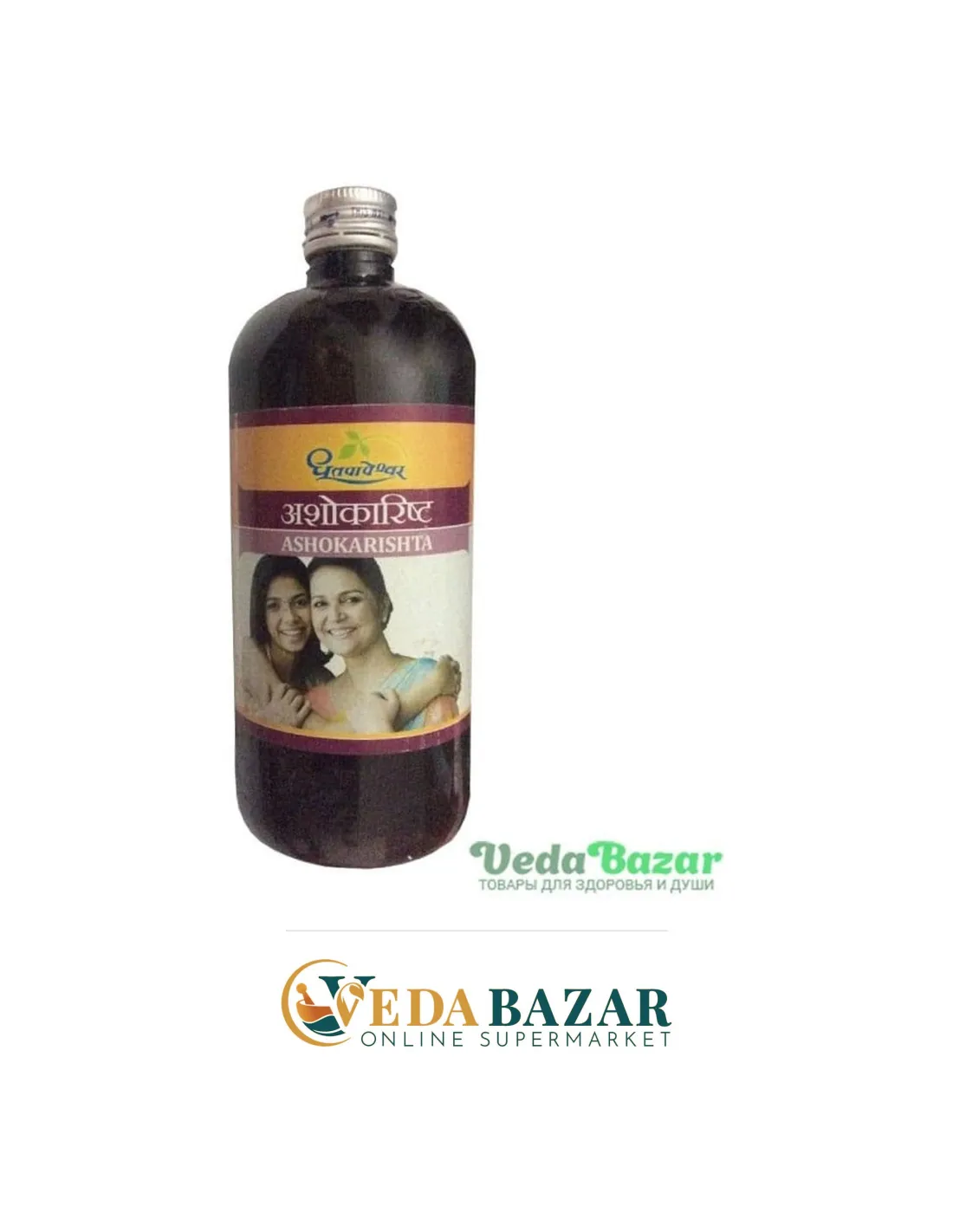
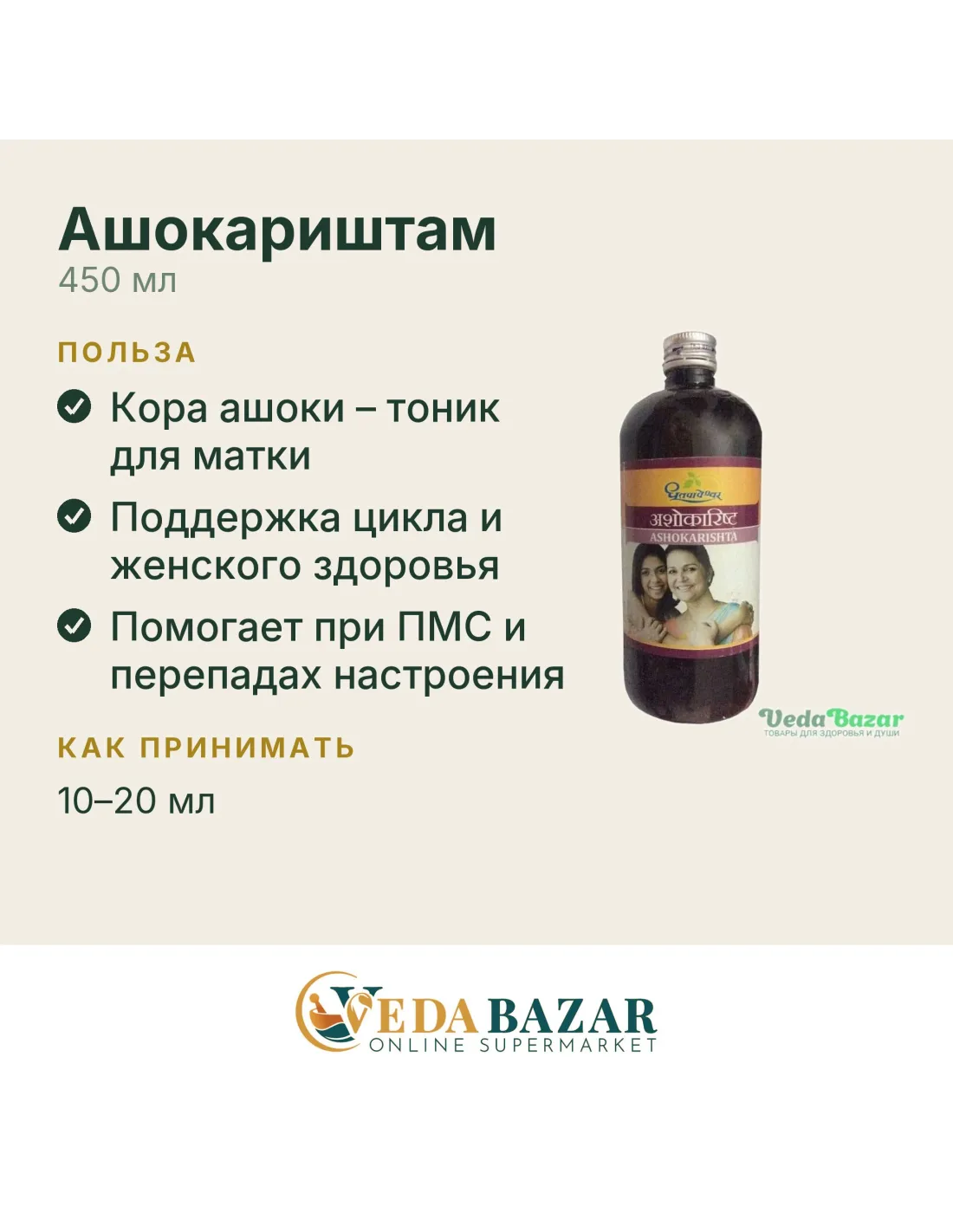
Ashokarishta, arishtam, 450 ml

in stock
₽670.00
Tax included
A tonic for women
· Ashoka bark – a tonic for the uterus
· Support for the cycle and women’s health
· Helps with PMS and mood swings
· Supports liver, blood and haemoglobin
· 450 ml
What is Ashokarishta?
Ashokarishta is a classical fermented arishtam of ashoka bark (Saraca indica) and dhataki flowers with jaggery, with additional herbs – haritaki, amla, bibhitaki, cumin, musta, ginger, turmeric, lotus and others. The manufacturer links it with asrigdara, shveta pradara and yoniroga, that is heavy discharges and periods.
According to our description it is a famous remedy for the female reproductive system at any age: a tonic for the uterus and the hormonal and digestive systems. It is used for heavy and short periods, anaemia, PMS and mood swings – from irritability to apathy, fever and haemorrhoids; it supports the liver, cleanses the blood and raises haemoglobin. Fermentation helps the herbs keep longer and absorb faster.
In Ayurveda ashoka means “without sorrow”: the bark is astringent, bitter and cooling, it calms Pitta and Kapha and balances Vata. Like all arishtams it contains a little natural alcohol from fermentation. It is a tonic “for all three doshas”. During the course it is better to avoid salty, spicy, fatty, fried and heavy food and to limit spices.
Key ingredients
Ashoka (Saraca indica) – the main herb: the bark is a uterine tonic, astringent, for heavy periods and cramps.
Dhataki (Woodfordia floribunda) – flowers: aid fermentation; support the female sphere and digestion.
Musta (Cyperus rotundus) – a tonic; removes stagnation; supports digestion.
Ginger (Zingiber officinale) – kindles agni; supports circulation and metabolism.
Daruharidra (Berberis aristata) – cleanses blood; supports digestion and liver.
Triphala (haritaki, amla, bibhitaki) – gently cleanses and supports immunity.
Who is it for?
Cycle: heavy and short periods, cramps
PMS: irritability, mood swings, apathy, pains in the abdomen and back
Female sphere: thrush, vaginitis, ovarian cysts – as prescribed by a doctor
Blood: low haemoglobin, fatigue
Digestion: needs gentle support
Any age: a tonic for women’s health
«Ashoka – the tree “without sorrow”»
Effect on the doshas
 Vata calmed: nourishes |
 Pitta calmed: cools |
 Kapha calmed: astringent taste |
How to take
As prescribed by an Ayurvedic doctor. Per the manufacturer: 10–20 ml (2–4 teaspoons) 2–3 times a day with an equal amount of lukewarm water (in our scheme – 1–2 tablespoons with a little warm water twice a day after meals). Like all arishtams and asavas it contains a little natural alcohol formed during fermentation.
If you are pregnant, breastfeeding, have a chronic condition or take medication – talk to your doctor first.
Contraindications: Alcohol dependence, childhood, individual intolerance of components.
Why we chose Dhootapapeshwar
Sadly, many Ayurvedic products in India are made from poor raw material. That is why Vedabazar works only with trusted makers. Shree Dhootapapeshwar was founded in 1872 by the Ayurvedic physician Krushnashastri Puranik (company data) – one of the oldest Ayurvedic companies in India; classical formulas follow the Ayurvedic texts strictly.
Product details
| Quantity | 450 ml |
| Form | arishtam |
| Maker | Shree Dhootapapeshwar, India |
| Storage | in a cool dry place |
This information is for reference only and does not replace medical advice.
- Need
- Women's health
- Dosha
- Pitta
Vata
dh0034
214 Items
Shipping from India – EMS, courier to your door
- We pack and ship your order within 7 working days and email you the tracking number – it is also in your account. Rare and made-to-order products may take longer – check the time when placing the order.
- Delivery takes 2–3 weeks on average, depending on customs and the post in your country.
- The EMS courier brings the parcel to your home and calls in advance – please add your phone number.
- Shipping is calculated by order weight and shown in the cart: from 1 420 ₽ for a parcel up to 250 g. The bigger the order, the cheaper each 100 g of shipping.
- If there is no EMS service in your country, the parcel is delivered by your national post.
- Up to 5 kg in one parcel.
More about shipping and customs · Questions – message us on Telegram
Ingredients per the manufacturer (in parts):
| Ashok twak (bark) (Saraca indica) | 100 parts |
| Dhataki pushpa (flowers) (Woodfordia floribunda) | 16 parts |
| Guda (jaggery) (–) | q.s. |
| Haritaki (Terminalia chebula) | 1 part |
| Amalaki (amla) (Emblica officinalis) | 1 part |
| Bibhitaki (Terminalia belerica) | 1 part |
| Jeeraka (cumin) (–) | 1 part |
| Krishna jeeraka (black cumin) (–) | 1 part |
| Musta (Cyperus rotundus) | 1 part |
| Shunthi (ginger) (Zingiber officinale) | 1 part |
| Daruharidra (Berberis aristata) | 1 part |
| Kamala (lotus) (–) | 1 part |
| Amraphalmajja (mango kernel) (Mangifera indica) | 1 part |
| Vasa (Adhatoda vasica) | 1 part |
| Shweta chandana (white sandal) (Santalum album) | 1 part |
Comments (0)
No customer reviews for the moment.
Tap to zoom