Shopping Cart



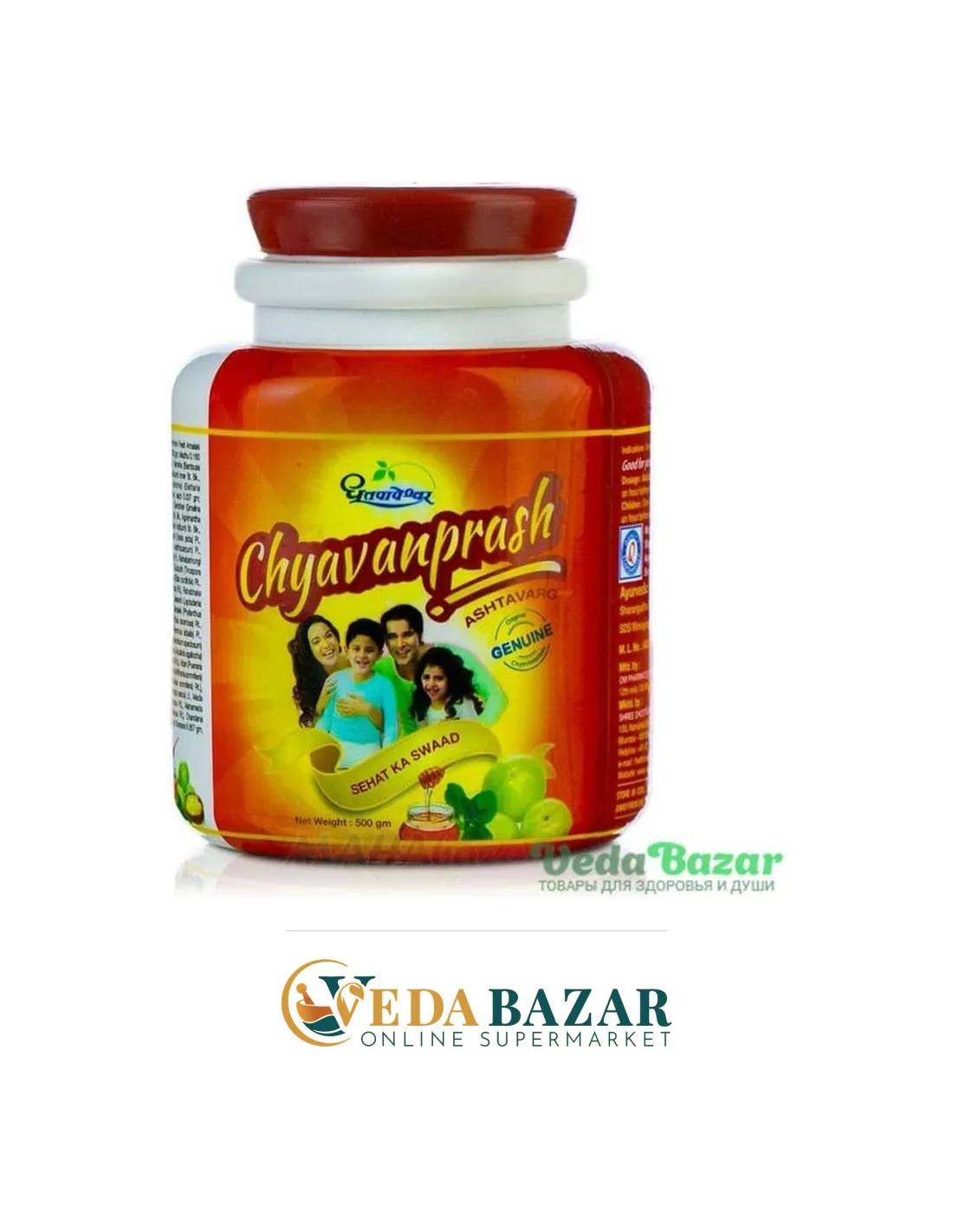
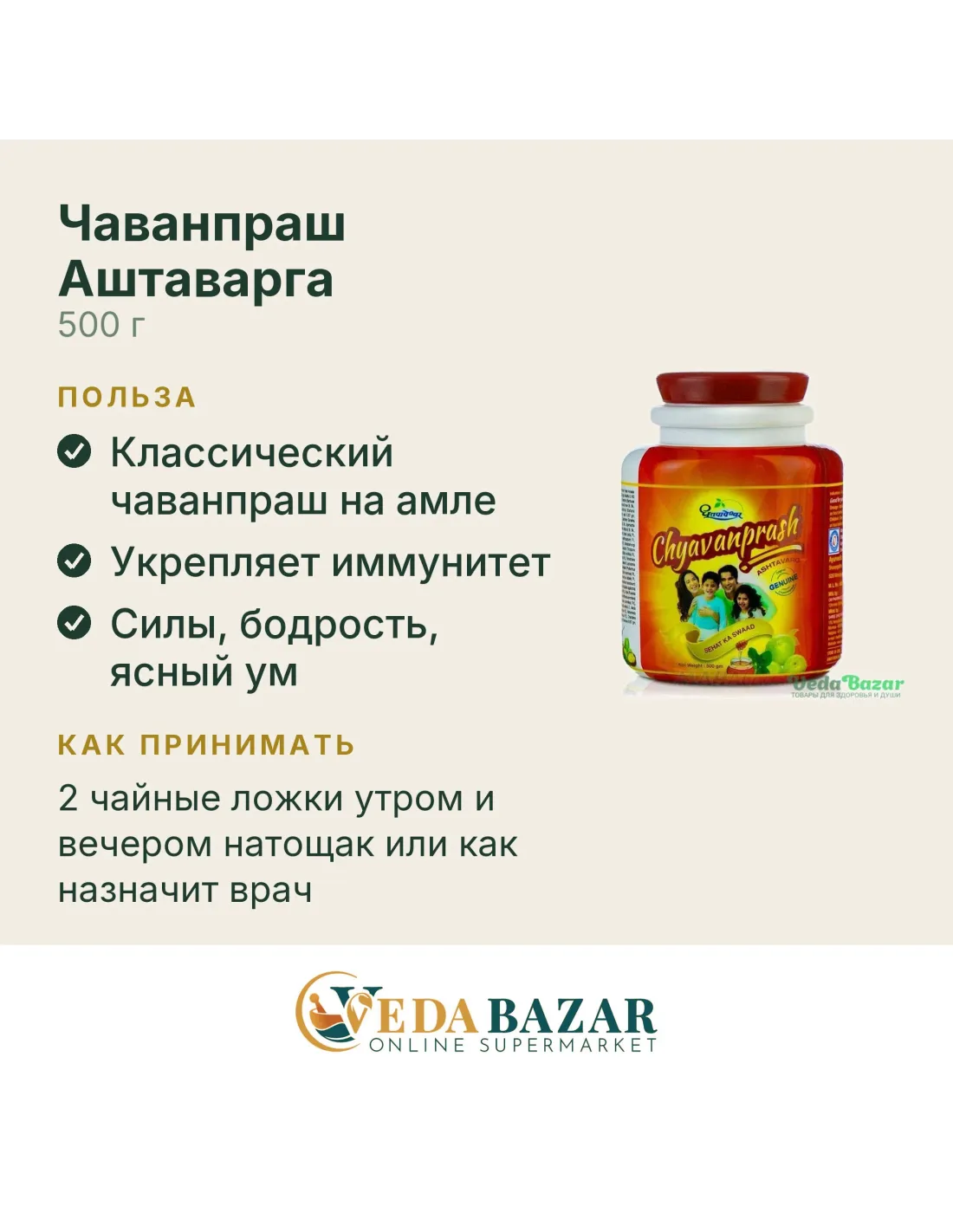
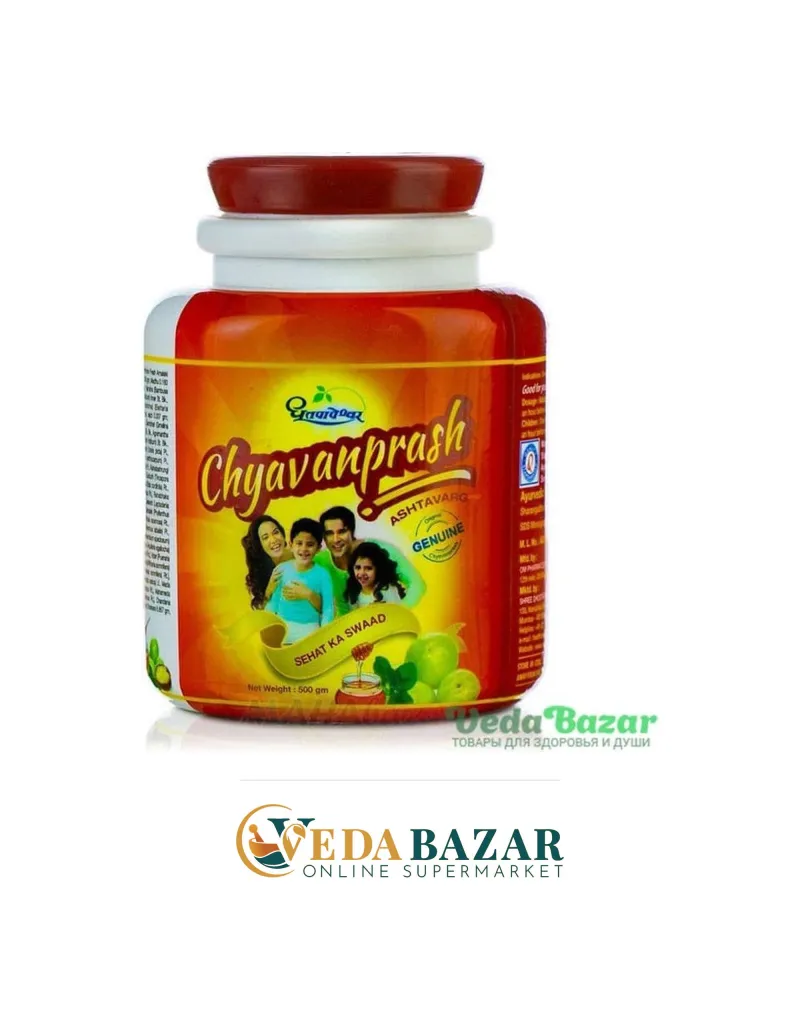
Chyavanprash Ashtavarga, 500 g

in stock
₽870.00
Tax included
A daily rasayana
· A classical amla chyavanprash
· Strengthens immunity
· Strength, vigour, a clear mind
· Breathing and digestion
· 500 g
What is Chyavanprash Ashtavarga?
Chyavanprash Ashtavarga is a fragrant, sweet, slightly spicy jam-like dark-brown mass with a delicate taste of spices, one of the most popular Ayurvedic products. Its base is the pulp of the amla fruit (Emblica officinalis), one of the richest natural sources of vitamin C. Add several dozen herbs, honey, ghee, sugar and spices, assembled to the canon. A thin silver foil lies under the lid as a natural preservative; in Ayurveda silver also supports the nervous system and concentration.
According to the manufacturer it is a classical rasayana traditionally used to support immunity, strength and general health, for old cough, breathlessness, weakness (daurbalya), weak agni and chronic colds. Chyavanprash is considered a natural bio-regulator: it helps metabolism and the endocrine system, regulates the digestive tract, nourishes and renews the tissues and keeps the mind clear. In our earlier description it is prescribed for weakness and recovery after illness, lowered immunity, inflammation, respiratory diseases, allergy, vitamin deficiency, low haemoglobin, weak vessels, premature ageing, raised cholesterol, brittle hair and nails, lowered libido, unstable blood pressure, depression and stress, heavy loads and sport, difficult adaptation to new conditions and life in a poor environment, and in complex support for urological and gynaecological diseases and multiple sclerosis. With regular use vigour grows, the wish to move returns, and chronic fatigue, apathy and low mood fade.
In Ayurveda it is sweet, sour and slightly pungent, mildly warming and nourishing. Chyavanprash balances all three doshas – especially Vata and Pitta – and nourishes every tissue. It is taken as a food-medicine: two spoonfuls morning and evening on an empty stomach.
Key ingredients
Amla (Emblica officinalis) – the base of chyavanprash: very rich in vitamin C, strengthens teeth, bones, hair, digestion and immunity, helps haemoglobin synthesis.
Haritaki (Terminalia chebula) – a rejuvenating herb: memory, vision, lungs, digestion, gently cleanses the bowel.
Bibhitaki (Terminalia bellirica) – tones, gently cleanses, calms high Vata.
Dashamoola – ten roots: supports the nervous and endocrine systems, rejuvenates.
Ashwagandha (Withania somnifera) – stamina, memory, calm sleep, the heart, strength.
Zedoary (Curcuma zedoaria) – anti-inflammatory, supports digestion and the production of gastric juice and bile.
Leptadenia (Leptadenia reticulata) – its Sanskrit name means “giver of life energy”: strength, immunity, lactation.
Bhumyamalaki (Phyllanthus niruri) – improves metabolism, choleretic, diuretic, supports and tones the liver, including under the load of alcohol and tobacco; for the skin (psoriasis, eczema).
Bala (Sida cordifolia) – the name means “strength”: balances the three doshas, relieves pain, supports stamina, immunity, skin and the liver, helps recovery after illness.
Who is it for?
Immunity: frequent colds, weakness after illness
Energy: chronic fatigue, apathy, depletion
Breathing: old cough, breathlessness
Digestion: sluggish agni, no appetite
Vata and Pitta: dryness, depletion, heat
«Chyavanprash is a tasty medicine eaten by the spoon»
Effect on the doshas
 Vata calmed: nourishes and softens |
 Pitta calmed: cooled by amla |
 Kapha slightly reduced: lifts sluggishness |
How to use
As prescribed by an Ayurvedic doctor. Per the manufacturer: 2 teaspoons morning and evening on an empty stomach, or as directed by the doctor; our earlier description gives ½–2 teaspoons 1–2 times a day for three months, once every six months. The effect is stronger with milk. Children from 4 years – half the dose. In pregnancy – only under a doctor’s supervision.
If you are pregnant, breastfeeding, have a chronic condition or take medication – talk to your doctor first.
Contraindications: diabetes, acute gastroenterocolitis, pancreatitis, cholecystitis, pyelonephritis and cystitis, exacerbation of ulcer disease, glomerulonephritis, allergic intolerance of the ingredients.
Why we chose Dhootapapeshwar
Sadly, many Ayurvedic products in India are made from poor raw material. That is why Vedabazar works only with trusted makers. Shree Dhootapapeshwar was founded in 1872 by the Ayurvedic physician Krushnashastri Puranik (company data) – one of the oldest Ayurvedic companies in India; classical formulas follow the Ayurvedic texts strictly.
Product details
| Quantity | 500 g |
| Form | chyavanprash (paste) |
| Maker | Shree Dhootapapeshwar, India |
| Storage | in a cool dry place |
This information is for reference only and does not replace medical advice.
- Need
- Immunity
- Dosha
- Kapha
Pitta
Tridoshic
Vata
dh0032
29 Items
Shipping from India – EMS, courier to your door
- We pack and ship your order within 7 working days and email you the tracking number – it is also in your account. Rare and made-to-order products may take longer – check the time when placing the order.
- Delivery takes 2–3 weeks on average, depending on customs and the post in your country.
- The EMS courier brings the parcel to your home and calls in advance – please add your phone number.
- Shipping is calculated by order weight and shown in the cart: from 1 420 ₽ for a parcel up to 250 g. The bigger the order, the cheaper each 100 g of shipping.
- If there is no EMS service in your country, the parcel is delivered by your national post.
- Up to 5 kg in one parcel.
More about shipping and customs · Questions – message us on Telegram
Ingredients in parts (maker data):
| Amalaki (amla) (Emblica officinalis) | 951 |
| Sharkara (cane sugar) (Saccharum officinarum) | 951 |
| Pippali (Piper longum) | 8 |
| Vanshalochan (Bambusa bambos) | 16 |
| Dalchini (cinnamon) (Cinnamomum zeylanicum) | 1 |
| Tamalpatra (Cinnamomum tamala) | 1 |
| Elaichi (cardamom) (Elettaria cardamomum) | 1 |
| Nagkeshar (Mesua ferrea) | 1 |
| Honey (madhu) (–) | 23 |
| Cow ghee (goghruta) (–) | 57 |
| Dashamoola, kwath (ten roots) (–) | 40 |
| Pippali, haritaki, kachora, bhumyamalaki, kushmanda, musta, pushkarmoola, meshashrungi, krushnagaru, ela, varahikanda, vidarikanda, ashwagandha, balamoola, mudgaparni, mashaparni, punarnava, guduchi, karkatshrungi, kamal, haranvel, draksha (–) | 4 (each) |
| Yashtimadhu (liquorice) (Glycyrrhiza glabra) | 8 |
Comments (0)
No customer reviews for the moment.
Tap to zoom