
Shopping Cart
Tulsi and liquorice: a throat tea for the cold season and a clear mind in Ayurveda
- Seasons
- 54 likes
- 160 views
- 0 comments
- ayurveda, tulsi, tea, immunity, meditation, herbal tea, liquorice, throat, colds
Morning in an old Indian house begins with tulsi. The woman of the house goes out to the courtyard where holy basil grows in a clay stand, lights a small lamp, waters the plant and quietly says a prayer. She will pick a few leaves for tea. This has been done in India for centuries – and there is more Ayurveda in this habit than it seems.
Tulsi – the sacred herb of India
Tulsi (holy basil) in India is not just a plant. It is revered as a form of the goddess, dedicated to Vishnu and Krishna, and its stems are made into prayer beads for mantras. Tulsi grows by almost every traditional home, and in autumn, in the month of Kartika, India celebrates Tulsi Vivah – the “wedding” of tulsi.
Classical Ayurvedic texts call tulsi surasa. It is a pungent, slightly bitter, warming herb. It reduces Kapha – mucus, heaviness, congestion – and Vata – cold and dryness. That is why in the cold, damp season tulsi is drunk almost every day in India.
Tulsi for the mind and practice
Tulsi is believed to fill the mind with sattva – clarity, light and calm. Its leaves are placed in offerings, and a cup of tulsi is drunk before morning prayer and meditation: it warms and opens the breath without stimulating like coffee. For those who practise pranayama this is especially valuable – tulsi helps you breathe more freely.
Liquorice – a sweet root for the throat and memory
In Sanskrit liquorice is called yashtimadhu – “sweet stick”. It is a sweet, cooling, coating root. It calms Vata and Pitta and softens dryness.
In the Charaka Samhita, the main text of Ayurveda, liquorice belongs to the group of herbs good for the throat and voice, and to the medhya rasayanas – herbs that nourish the mind and memory. That is why for centuries it has been given to those who talk, sing and chant mantras a lot.
Why together: tulsi, liquorice and mint
In Organic India's Tulsi Mulethi the three herbs complement each other. Tulsi warms and clears excess Kapha. Liquorice soothes the throat and balances the heat of tulsi with its coolness and sweetness. Peppermint freshens the breath and clears the head. The result is a gentle, warming caffeine-free infusion – for the cold season and for the morning before practice.
How to drink it
1. Put a bag in a cup, pour freshly boiled water, cover and steep 3–5 minutes.
2. If your throat is scratchy – drink it warm, in small sips, 2–3 cups a day.
3. Add honey once the tea has cooled a little: Ayurveda never heats honey.
4. In the morning before meditation – one cup 10–15 minutes before practice.
Liquorice is not recommended in large amounts or for long periods with high blood pressure, swelling or pregnancy. In these cases talk to your doctor.
Why we chose Organic India
Sadly, in India a lot of Ayurvedic raw material is grown in polluted areas and stored in poor conditions. That is why at Vedabazar we work only with verified makers. Organic India Tulsi Mulethi – organic herbs grown without chemical fertilisers or pesticides. The maker has India's NPOP organic certificate, GMP and FSSC 22000 certificates and laboratory quality control. 25 tea bags without metal staples, caffeine free.
If you want pure tulsi – take Tulsi Original, and for warmth in winter – Tulsi Ginger Turmeric.

Tulsi Mulethi 300 ₽ |
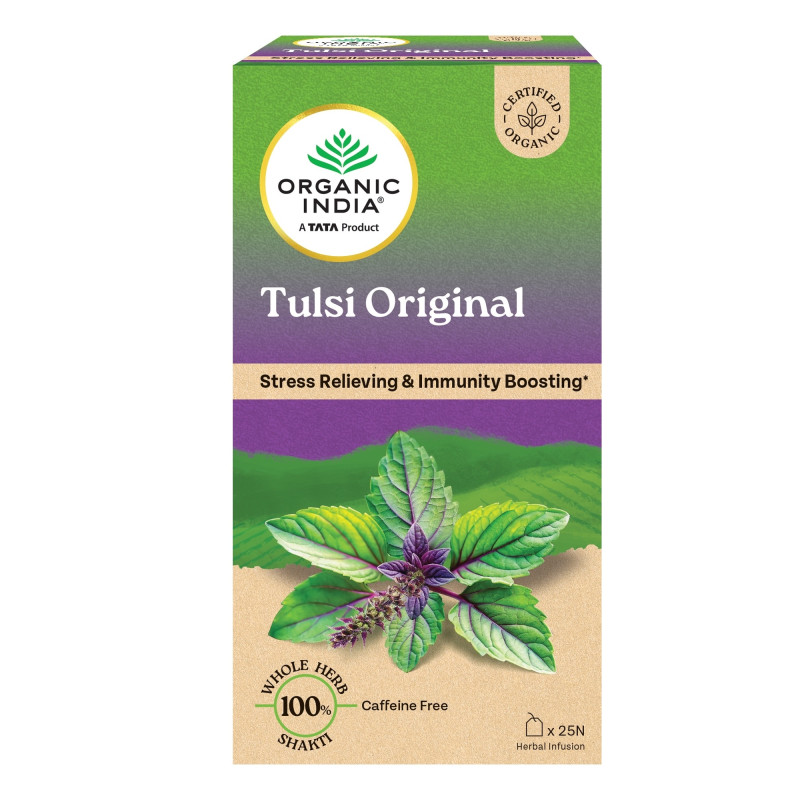
Tulsi Original, 25 tea bags 400 ₽ |
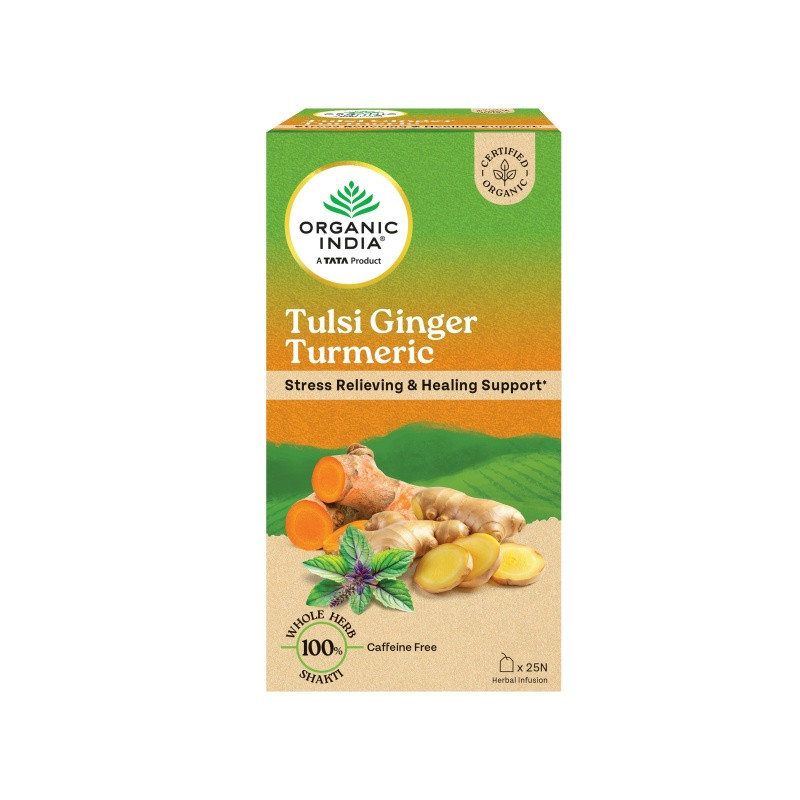
Tulsi Ginger Turmeric 390 ₽ |
Frequently asked questions
Are tulsi and shop basil the same?
No. Tulsi is holy basil (Ocimum tenuiflorum), a different species with a warmer, spicier taste. Ordinary culinary basil will not replace it.
Can children drink this tea?
Because of the liquorice, better ask a doctor, especially for a young child.
Does the tea contain caffeine?
No, it is a herbal infusion without tea leaf. You can drink it in the evening too.
These are general recommendations, not treatment and not a substitute for a consultation. If you have chronic conditions or take medication – consult a specialist.
What next
Gift · free
Brochure “Between leaf fall and snow”
Tulsi is one of my favourite helpers in the cold season. I have put the other autumn and winter rituals into the brochure “Between leaf fall and snow”. Tap the button – the Telegram bot will send it straight away. The brochure is in Russian.
Ira Niroula, specialist in Ayurveda, prevention and longevity.
Tulsi (surasa) and liquorice (yashtimadhu, group of herbs for the throat and medhya rasayanas) – Charaka Samhita (Sutrasthana, ch. 4; Chikitsasthana, ch. 1). Tea ingredients – from Organic India.
Comments (0)