Shopping Cart


in stock

You step out into the cold in the morning – and your knees feel wooden. You get out of bed – your joints crack. By evening your back aches, and in damp weather your fingers “twist”. In our dosha test joints are the second most common complaint after digestion.
Ayurveda explains it simply. Bones and joints are one of the main seats of Vata, and Vata is cold, dryness and movement. In winter, in the wind and with age there is more Vata, and the joints feel it first. But they ache differently for everyone – and the help is different too.
How joints ache for the three doshas
Vata: cracking, clicking, cramps and spasms, pain that “wanders” from place to place, worse with cold and wind.
Pitta: the joint feels hot, may turn red, the pain is worse with heat and exertion.
Kapha: swelling, heaviness, stiffness in the morning – it takes a long time to “get going”.
There is also a common root. When the digestive fire weakens, the body accumulates ama – heavy undigested residue. Vata carries ama around the body and “drives” it into the joints. That is why Ayurveda treats joints not only from the outside but also through digestion.
Step 1. Warmth from outside
Warmth and oil calm Vata. The Charaka Samhita says that daily oil massage makes the body strong and resilient. Before your shower, rub your joints with warm sesame oil for 5–10 minutes in circular movements. Dress warmer, protect your knees and lower back from the wind.
Step 2. Warmth from inside
Cold food, raw salads and iced drinks add cold to Vata in winter. Eat warm, cooked food with spices – ginger, turmeric, cumin. Instead of cold juice – hot tea. Tulsi, ginger and turmeric – three warming herbs in one cup. Ginger kindles the digestive fire, in India turmeric has been added to food for joint pain for centuries, and tulsi helps the body handle inflammation.
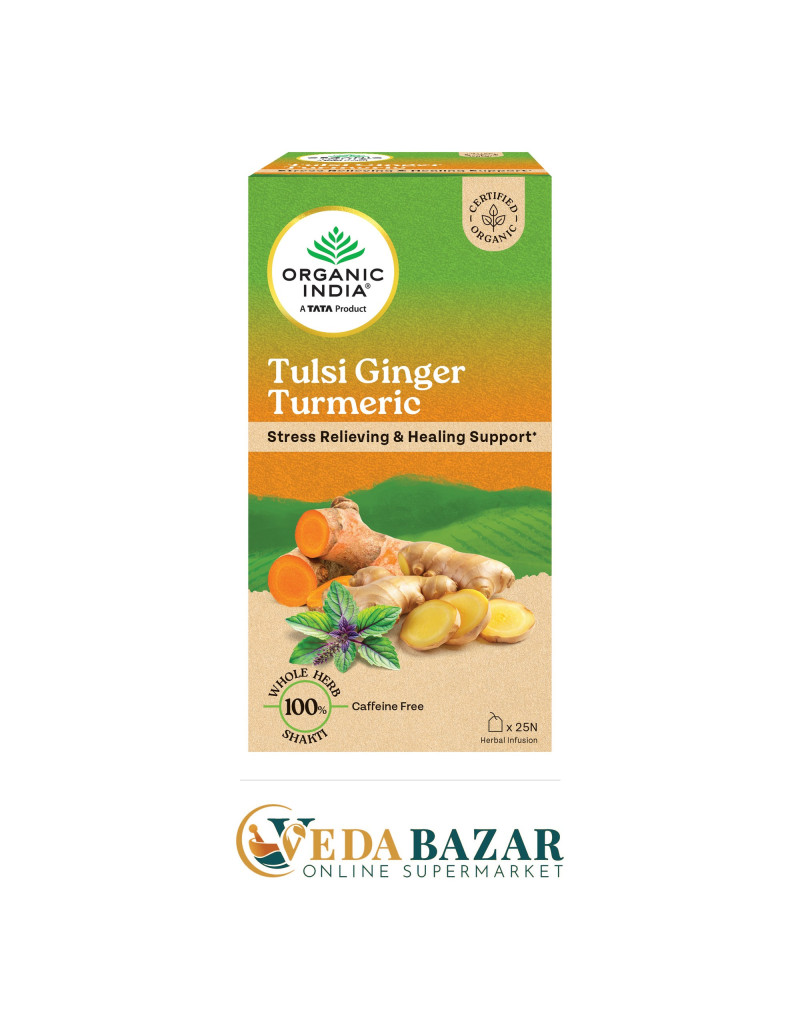
Tulsi Ginger Turmeric, 25 tea bags 390 ₽ |
«Joints do not ache on their own: first the digestive fire fades, ama builds up, and cold Vata drives it into the joints»
Step 3. If your joints are stiff and painful
Flexibility – a four-herb formula for joints. Its base is motha root: in the Charaka Samhita it is the best herb for digestion and clearing ama. Ashwagandha warms and nourishes, the Charaka Samhita gives guduchi for inflamed joints, tulsi helps with inflammation. Take it as a course – at least three months, 1–2 capsules twice a day with food.
If Vata is “drained” – fatigue, anxiety, poor sleep, cracking joints – add ashwagandha. It is Ayurveda's main adaptogen: a warm root that brings back strength.
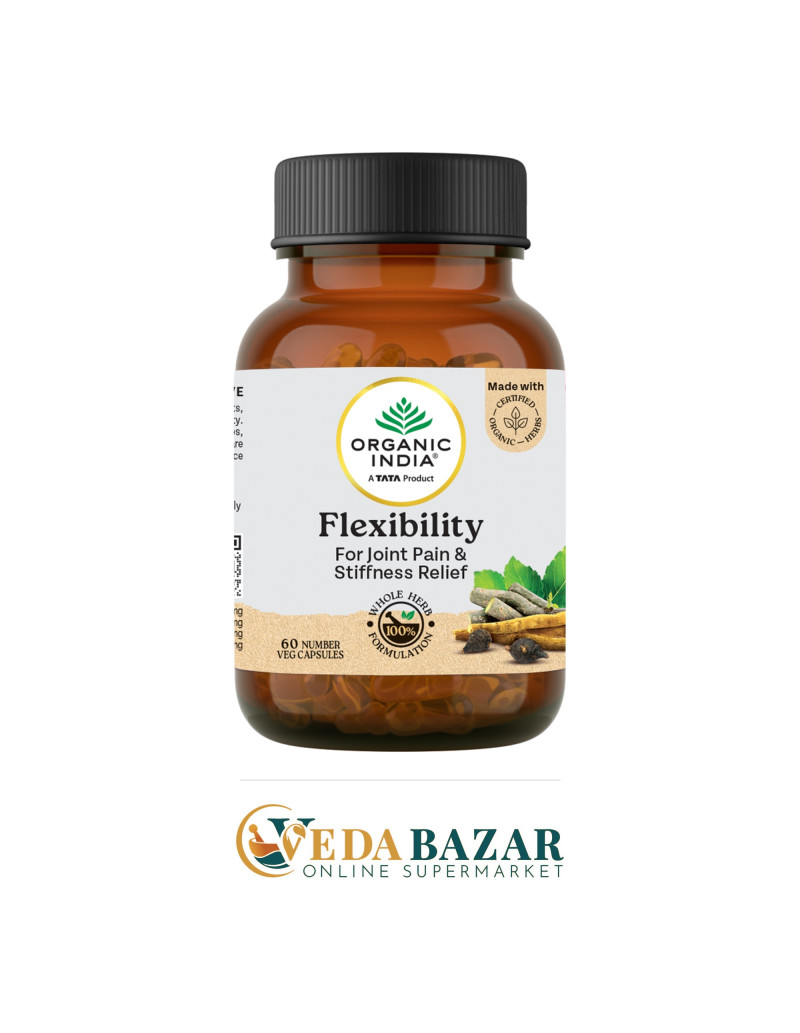
Flexibility, for joints, 60 capsules 490 ₽ |
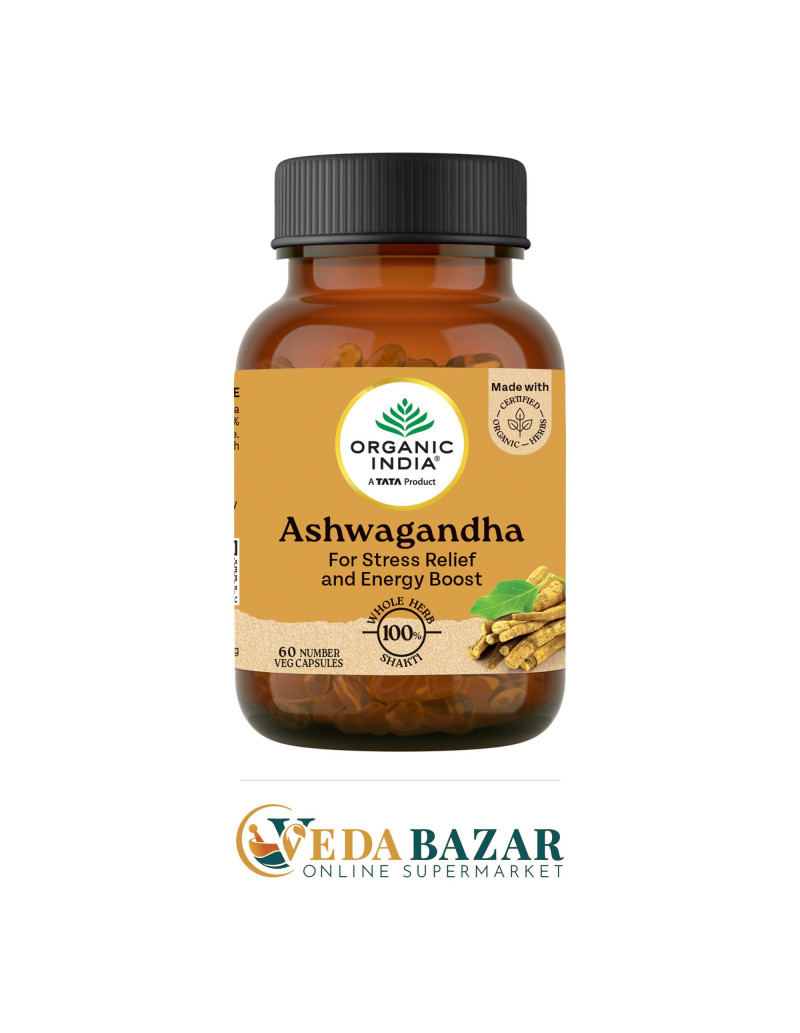
Ashwagandha, 60 capsules 450 ₽ |
Step 4. If it is about the bones
With age, especially for women after 45, bones lose density. Osteoseal – a formula based on hadjod. In Sanskrit it is called asthisamhrita – “the bone joiner”: in the Bhavaprakasha it is the herb that helps fractures heal. Moringa brings minerals, shatavari nourishes. The label says: for calcium deficiency, osteoporosis and arthritis.
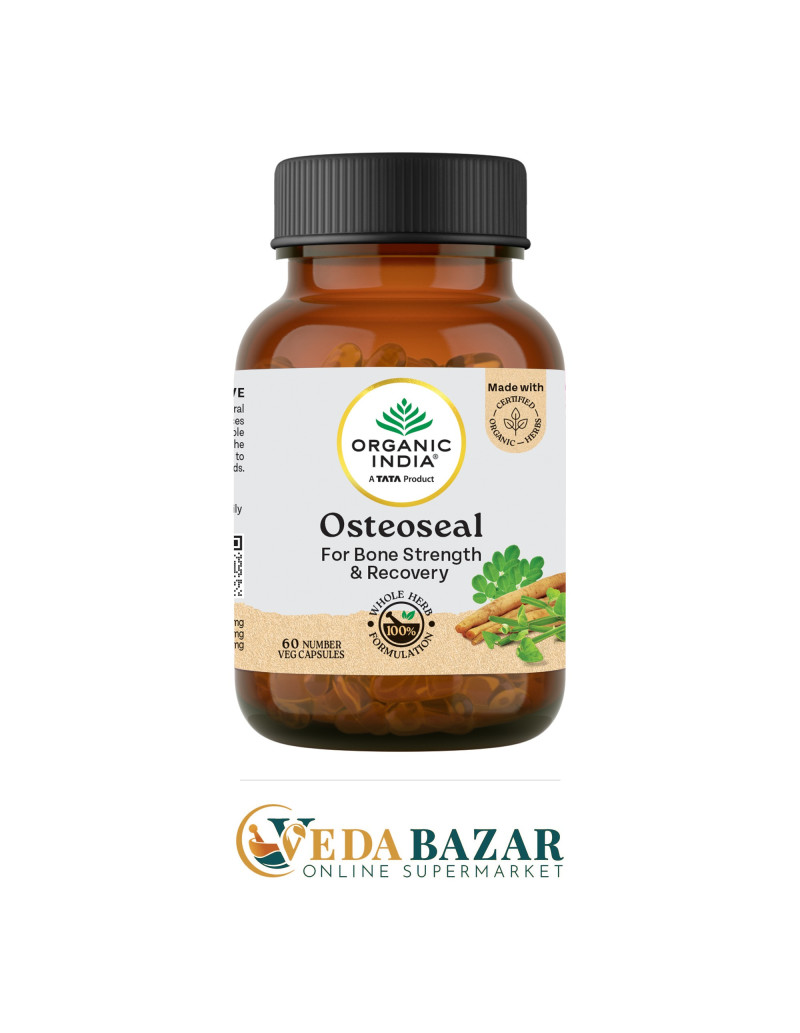
Osteoseal, for bones, 60 capsules 490 ₽ |
Simple habits for joints
Move every day. Gentle yoga, a walk, joint exercises in the morning. For Vata stillness is as harmful as overload.
Do not eat late or too much. A heavy dinner means ama by morning.
Drink warm water. A sip of hot water every half hour to an hour helps digestion and warms you.
Go to bed before 10 pm. Lack of sleep stirs up Vata.
These are general recommendations, not treatment. If a joint is very swollen, red or hurts after an injury, if you have rheumatoid arthritis or gout, are pregnant or take medication – talk to your doctor first.
What next
Free · 3 minutes
Dosha test
Find out your leading dosha and why your joints in particular ache. The Telegram bot asks a few questions and sends recommendations.
Ira Niroula, specialist in Ayurveda, prevention and longevity.
Oil massage – Charaka Samhita, Sutrasthana, ch. 5; musta – Sutrasthana, ch. 25; guduchi for vatarakta – Chikitsasthana, ch. 29; hadjod (asthisamhrita) – Bhavaprakasha; herb properties – D. Frawley, V. Lad, The Yoga of Herbs. Ingredients and doses – from Organic India.


Comments (0)