
Shopping Cart
Organic India: why this Indian brand of herbs and tulsi teas is valued all over the world
- Ayurvedic nutrition
- 69 likes
- 202 views
- 0 comments
- Organic India, tulsi, tea
When I choose Ayurvedic herbs for the shop, my first question is not “what herb is this” but “where and how was it grown”. Sadly, in India a lot of raw material grows in polluted areas, by roads, and is dried and stored any old way. Even the right herb from such a place will do no good.
That is why Organic India is the base of our range of tulsi teas and herbs in capsules – Organic India. Here is why.
A brand that starts with the farmer
Organic India works with thousands of small family farms across India – tens of thousands of acres of organic land. Farmers and wild-herb collectors are trained in organic and biodynamic farming.
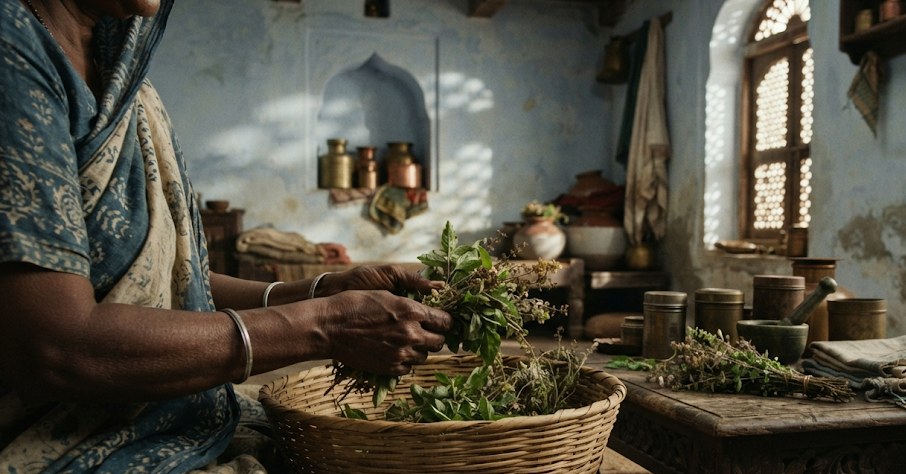
The company pays for the farmers' organic certification itself and buys their harvest at above-market prices. Many of the farmers are women, widows and elderly people, for whom this is a decent income.
When a farmer has a stable income and training, there is no reason to chase yields with chemicals. The purity of the herbs starts here.
5 certificates that are hard to get
Organic India has not one “green badge” but a whole series of international checks:
| 1. | NPOP / India Organic – India's national organic certification |
| 2. | USDA Organic – the US organic standard |
| 3. | EU Organic – the EU organic standard |
| 4. | Non-GMO Project – most tulsi teas and herbal supplements are verified as GMO-free |
| 5. | GMP, HACCP, ISO – standards of production purity and safety |
The American and European certificates are needed to sell in the US and Europe – organic requirements there are among the strictest in the world. Today Organic India is part of the Tata group – one of India's best-known and most respected companies.
“I drink tulsi teas every day myself and calmly recommend Organic India to clients: it is a case where behind the herb you can see the field, the farmer and the checks.”
Ira Niroula
Tulsi – the heart of the brand
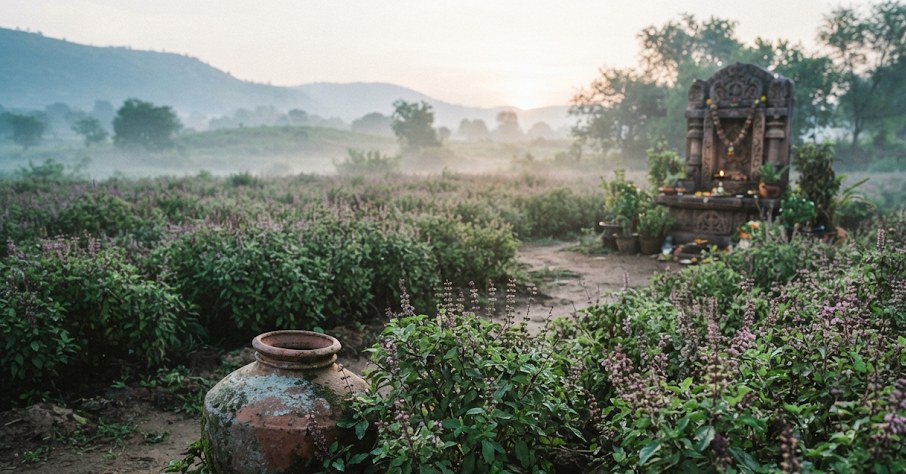
Organic India became known worldwide thanks to tulsi – holy basil. In Ayurveda tulsi is called “the incomparable one” and considered a rasayana herb: it supports breathing, immunity and clarity of mind, and in Indian homes it is worshipped every morning.
The brand grows three kinds of tulsi – Rama, Krishna and Vana – and blends them in its teas. You can try, for example, tulsi with ginger and turmeric.
What we have from Organic India
Tulsi teas and herbal teas, herbs in capsules – ashwagandha, brahmi, amalaki, triphala – and psyllium. A capsule is simply dried and ground whole herb, without unnecessary fillers.
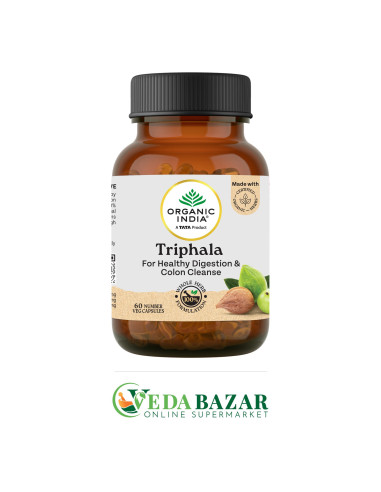
Triphala, 60 capsules 370 ₽ |
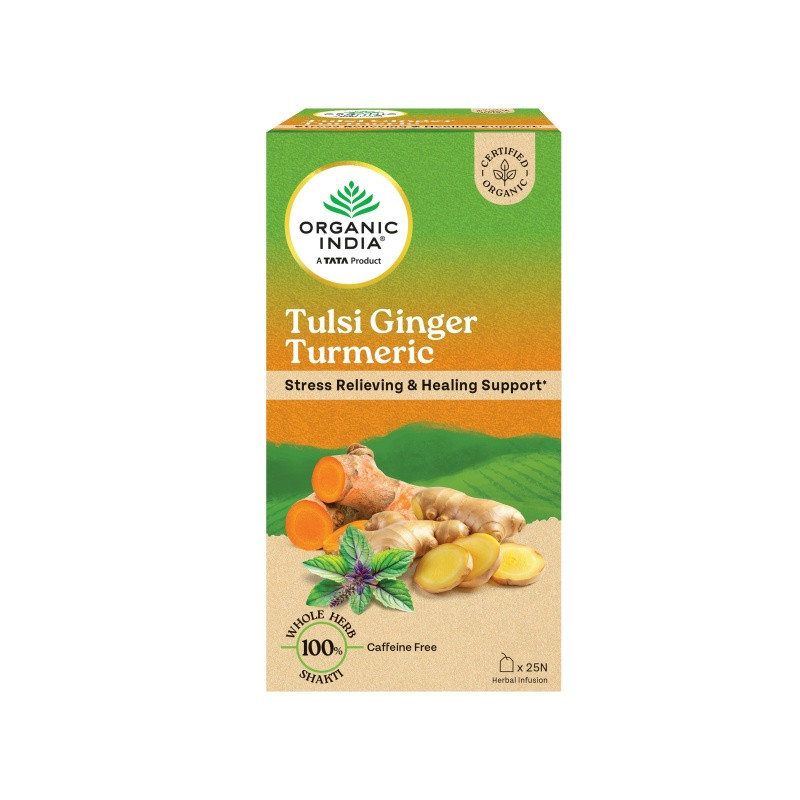
Tulsi Ginger Turmeric 390 ₽ |
Frequently asked questions
How do Organic India capsules differ from pharmacy supplements?
The capsules contain whole organic herb, not a synthetic extract of a single substance. That is how herbs are used in Ayurveda.
Are the tea bags staple-free?
Yes, Organic India tea bags have no metal staples.
Can I take herbs without a consultation?
Teas – yes, they are an ordinary drink. With chronic conditions, pregnancy or medication, capsules are better agreed with a specialist.
Gift
Brochure “Between leaf fall and snow”
Rituals for autumn and winter – morning, day and evening. In Russian.
About farmers, certificates and kinds of tulsi – from Organic India (organicindia.com). Tulsi in Ayurveda – Bhavaprakasha; D. Frawley, V. Lad, The Yoga of Herbs.
The information in this article is for reference and does not replace a doctor's consultation.
Comments (0)