Shopping Cart


in stock

You lie down – and your thoughts keep spinning. Or you fall asleep easily, but at three in the morning your eyes open by themselves. And during the day – fatigue, as if your battery is flat. In our dosha test mood and sleep are the most common complaints after digestion.
Ayurveda distinguishes what kind of sleep it is. For Vata sleep is light and anxious: hard to fall asleep, thoughts running in circles. For Pitta – you wake in the middle of the night with a hot head and plans for tomorrow. For Kapha sleep is heavy and long, and it is hard to get up in the morning. So the help differs too – from a simple cup of chamomile to a course of herbs.
Step 1. An evening cup instead of the phone
The gentlest ritual is a warm caffeine-free tea an hour before bed. Chamomile – just chamomile flowers: it cools and calms Vata and Pitta. Tulsi Honey Chamomile – chamomile with three kinds of tulsi and fennel: it releases the tension of the day, and fennel helps digest dinner.
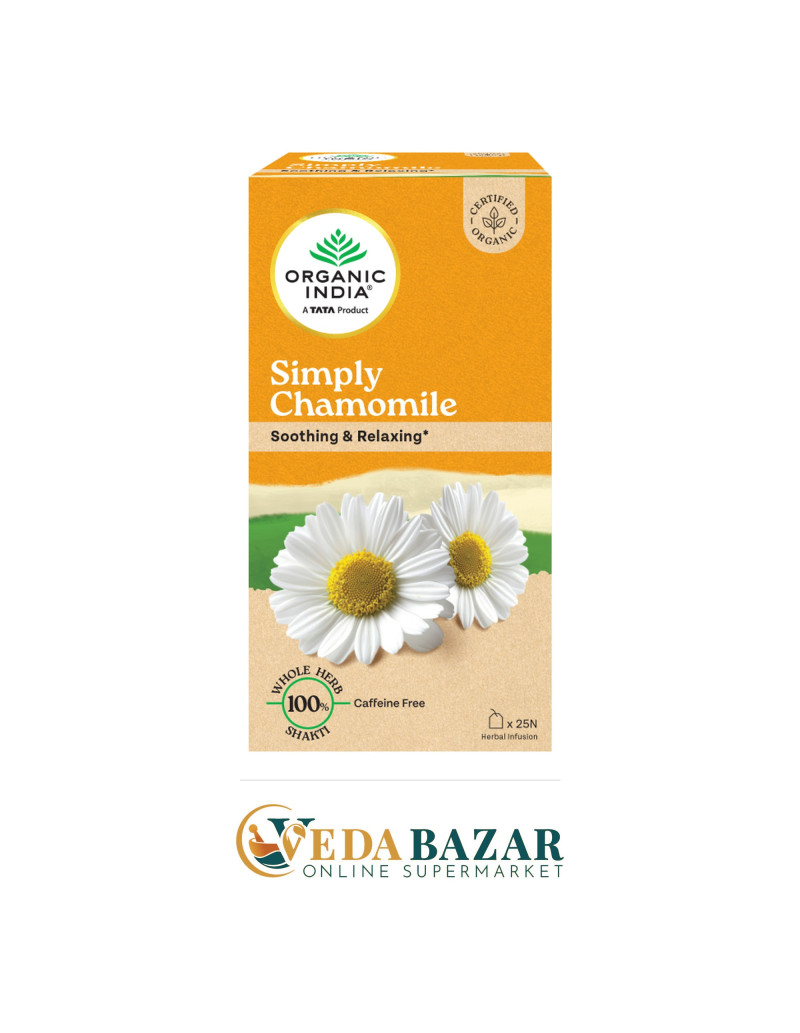
Simply Chamomile, 25 tea bags 410 ₽ |

Tulsi Honey Chamomile 390 ₽ |
Step 2. If it is hard to fall asleep
Revitalise Sleep tea – besides chamomile it contains tagara, Indian valerian. In Ayurveda tagara calms Vata – a restless mind and shallow sleep. Liquorice softens the taste, mint refreshes. Drink your last cup about an hour before bed.
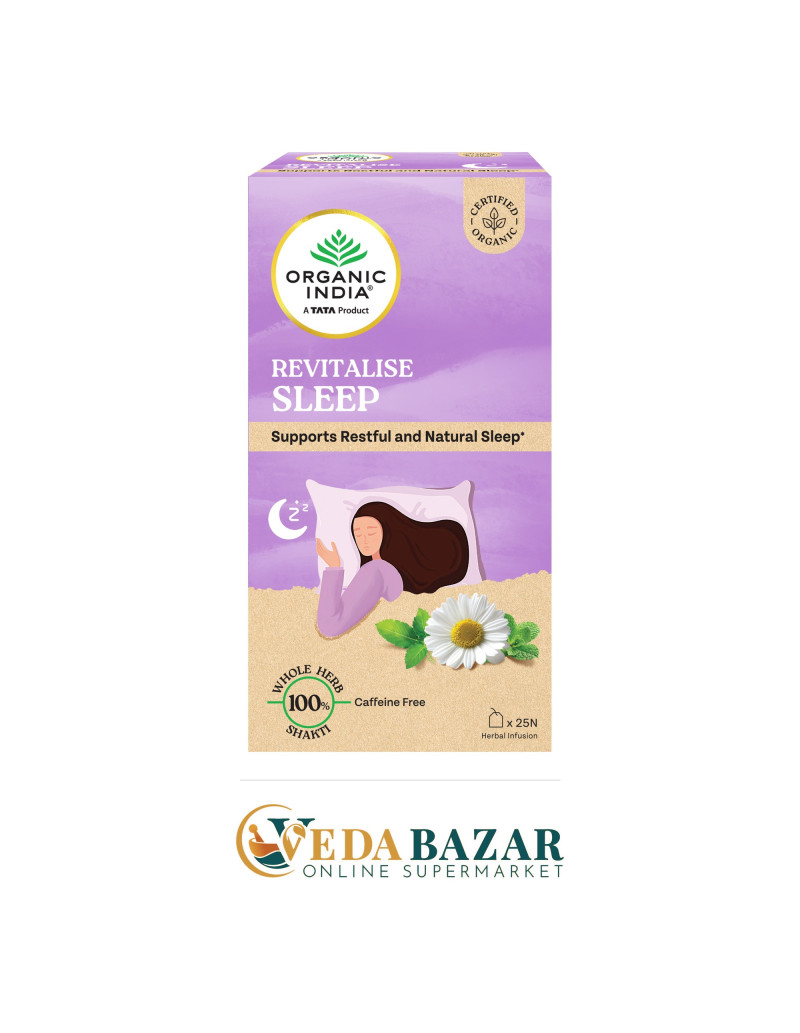
Revitalise Sleep tea 450 ₽ |
«In the Charaka Samhita sleep is one of the three pillars of life, alongside food and moderation»
Step 3. If stress has drained you
When the strain lasts for months, one cup of tea is not enough. Ashwagandha – Ayurveda's main adaptogen: the root helps the body cope with stress more calmly and brings back strength. In the Charaka Samhita ashwagandha belongs to the groups of herbs that give strength and nourish the body. It is taken as a course – from three months, morning and evening. When Vata calms down, sleep usually becomes deeper.
Step 4. If your mind is overloaded
Brahmi – a herb for the mind. The Charaka Samhita names mandukaparni, which in India is also called brahmi, as one of the four herbs that nourish the mind and memory. Brahmi cools and calms – it is taken during a lot of study or mental work and when thoughts make it hard to concentrate.

Ashwagandha, 60 capsules 450 ₽ |

Brahmi, 60 capsules 450 ₽ |
Simple habits for sleep
Go to bed before 10 pm. In Ayurveda 6 to 10 pm is Kapha time: sleep comes easily and is deep. After 10 pm Pitta time begins, and the mind “wakes up” again.
A light dinner 2–3 hours before bed. Heavy food at night disturbs both digestion and sleep.
Warm oil on the feet. Charaka writes that a foot massage helps sound sleep.
Screens away an hour before bed. Instead of the news – a cup of tea, dim light and a couple of minutes of calm breathing.
These are general recommendations, not treatment. If insomnia lasts more than a month, if you have depression or anxiety, are pregnant or take sleeping pills, sedatives or other medication – talk to your doctor first.
What next
Gift · free
Brochure “Between sunset and sunrise”
I have put an Ayurvedic evening ritual – step by step, from dinner to sleep – into the brochure “Between sunset and sunrise”. Tap the button – the Telegram bot will send it straight away. The brochure is in Russian.
Ira Niroula, specialist in Ayurveda, prevention and longevity.
Sleep as a pillar of life – Charaka Samhita, Sutrasthana, ch. 11; ashwagandha – Sutrasthana, ch. 4; mandukaparni and liquorice – Chikitsasthana, ch. 1; foot massage – Sutrasthana, ch. 5; herb properties – D. Frawley, V. Lad, The Yoga of Herbs. Ingredients and doses – from Organic India.


Comments (0)