
Shopping Cart
Winter is not a time to survive: why Ayurveda considers it the best season for health
- Seasons
- 79 likes
- 226 views
- 0 comments
- immunity, winter
We are used to thinking of winter as a season to endure: colds, fatigue, wanting to sleep and eat. Ayurveda sees it quite differently. According to the classical texts winter is the time when the body's strength is greatest of the whole year. Used well, it lets you not just “avoid getting ill” but build up a reserve of health until spring.
Why is that – and why does it turn out the other way for most people?
The body in winter: a fire burns inside
The cold outside seems to “lock” the warmth inside. The digestive fire – agni – burns stronger than in any other season. That is why you want to eat more in winter: the body is not being fussy, it is asking for fuel.
If you give it a light salad and coffee on the run, the fire has nothing to “burn”. The body starts to dry out and tire. Hence winter dry skin, aches, poor sleep and the feeling of having no energy at all.
Why we catch colds: it is not the cold
“In Ayurveda a cold starts not with cold but with dryness.”
Autumn leaves a legacy of a lot of Vata – the principle of movement, with the qualities of cold, dryness and lightness. Wind outside and hot radiators at home dry out the most delicate places: the lining of the nose and throat, the skin, the joints, the nervous system. A dry mucous membrane protects less well, and any virus gets through more easily.
The good news: dryness is easy to correct with simple daily practices. These are classical Ayurvedic practices, and they take a few minutes a day.
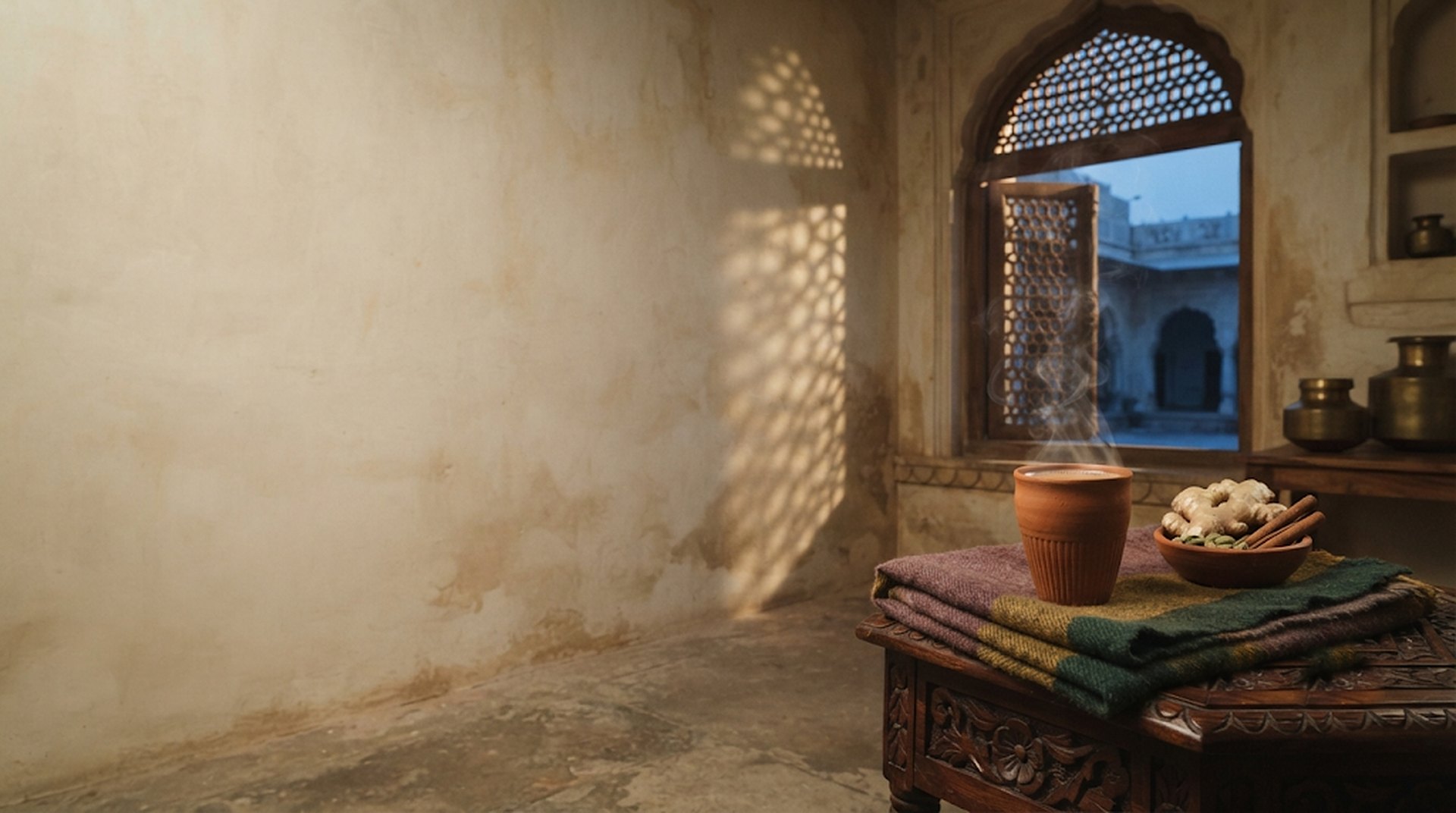
Three rituals you can start tomorrow
| 1. | Oil in the nose in the morning – nasya. 1–2 drops of warm oil in each nostril after brushing your teeth. The lining stops drying out from wind and radiators. The classical oil for nasya is Anu Thailam from Kottakkal. |
| 2. | Warm oil on the whole body before your shower. Apply warm sesame oil, especially to the feet, knees, lower back and outer ears, wait 10–15 minutes and take a warm shower. This is abhyanga – one of Ayurveda's best-known practices against Vata. |
| 3. | Tulsi instead of coffee. Coffee dries and agitates Vata. Tulsi – India's holy basil – gently energises and warms. In the morning – with ginger, and if you are prone to heartburn and heat – the classic Tulsi Original. |

Anu Thailam, Kottakkal 199,80 ₽ |

Sesame oil, 200 ml 700 ₽ |
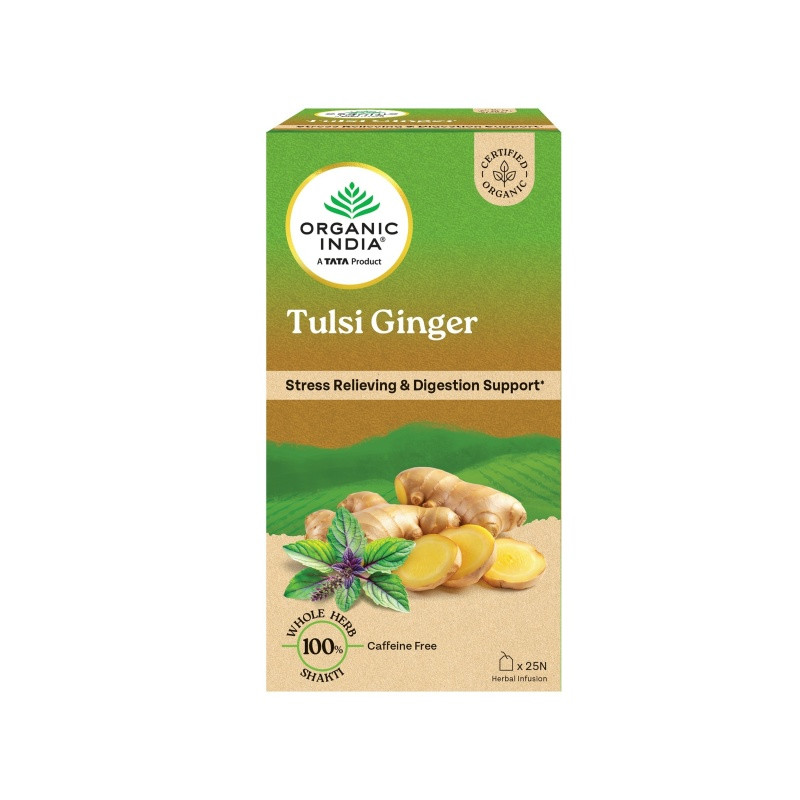
Tulsi Ginger, 25 tea bags 350 ₽ |
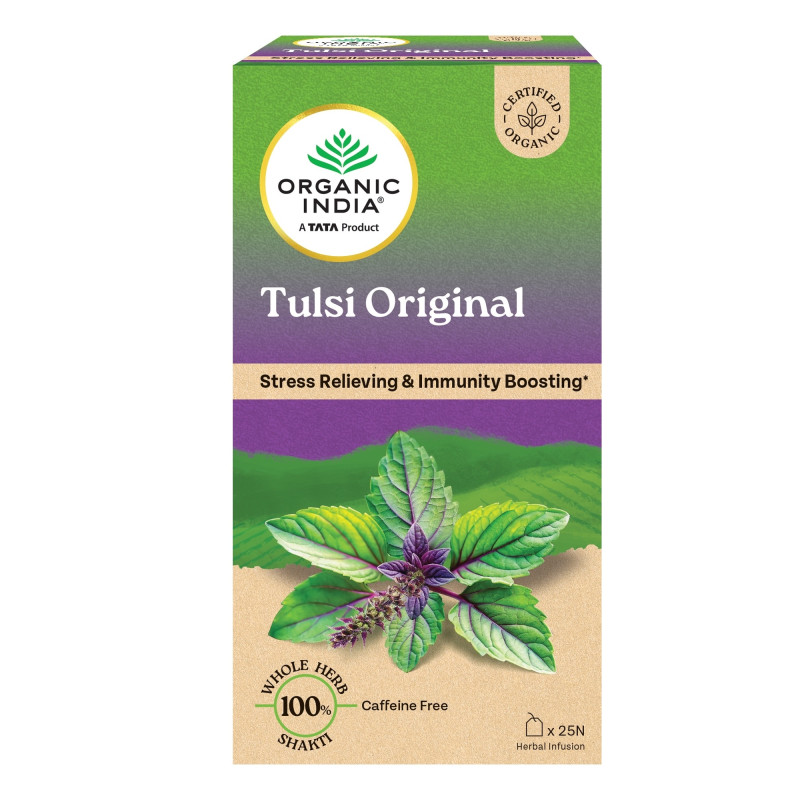
Tulsi Original, 25 tea bags 400 ₽ |
What to eat in winter
In winter food should be warm, filling and with oil. Ayurveda advises:
Sesame – warms and lubricates from within.
Ghee – 1–2 teaspoons in porridge, dal or rice.
Warm spiced milk at night – with turmeric, ginger or nutmeg.
Jaggery instead of white sugar – winter needs the sweet taste.
Rice, wheat, urad and mung dal – the filling base of the winter table.
Salads, smoothies, iced water, crispbreads and snacks are better left for summer.
If you feel heavy and bloated after meals – first sort out your digestion and do not increase portions.
Free
All 11 winter rituals – in the brochure “Between leaf fall and snow”
The three rituals above are just the beginning. In the brochure: what to do in the morning, afternoon and evening, what to eat and avoid, and an Ayurvedic first-aid kit for the first signs of a cold. It arrives straight away in Telegram. The brochure is in Russian.
A kit for the first signs
Ayurveda teaches you to catch an illness at the very beginning, while it is only “whispering”: a slight chill, a scratchy throat, congestion. At this stage gentle remedies help very well – the main thing is to start in the first hours. How and how much to take is described in detail in the brochure.

Septilin, Himalaya 455,46 ₽ |

Talisadi churna 309,71 ₽ |

Koflet-H lozenges 892,70 ₽ |
Everyone has their own winter
Everything above suits almost everyone. But each person has their own nature – in Ayurveda this is the dosha. Some need more oil, warmth and sleep in winter. Others, on the contrary, need more movement and spices.
To understand what you in particular need, take a short dosha test – in the same Telegram bot as the brochure. At the end you get first recommendations on food and lifestyle for your constitution.
Test
Find your dosha
A few minutes – and you will understand what kind of winter you need.
When you need a personal consultation
If fatigue lasts for weeks, colds come one after another or you simply want to understand yourself more deeply – general advice is not enough. In a consultation Ira Niroula, a doctor of modern medicine and Ayurveda, looks at the whole picture: body, routine, food, sleep, emotions.
After the consultation you receive a detailed written report: your dosha and imbalance, a food and routine plan for about a month, herbs and practices chosen for you.
Clients note that after consultations their digestion and rest improved, their mood evened out and it became clear what suits them.
“As if I learned to eat all over again – now meals are one of my favourite rituals.”
from a client's review
If you want to walk the path together – there is three-month support: meetings twice a month, menus, exercises, choice of remedies and support in a chat.
Consultation
A one-off consultation or support
Choose an option and pay on the site – Ira will write to you within a day.
And if you would like to get to know Ayurveda calmly first – start with Ira's e-book “Wind, fire and earth within you” – a PDF that arrives in Telegram straight after payment. The book is in Russian.
These are general winter principles, not a scheme for everyone: balance depends on constitution and lifestyle. The information in this article is for reference and does not replace a doctor's consultation. If the illness progresses, a high temperature develops or things get worse – see a doctor.
Sources: classical Ayurvedic texts (Charaka Samhita, Ashtanga Hridayam – the routine for the winter seasons), Ira Niroula's brochure “Between leaf fall and snow”.
Comments (0)