
Shopping Cart
Constipation, heartburn, heaviness after meals? Digestion and the liver with Zandu
- Ayurvedic nutrition
- 56 likes
- 163 views
- 0 comments
- ayurveda, Zandu
Your morning starts with sitting in the toilet and waiting. Then coffee «to get things going», lunch on the run, by evening a bloated belly, and after dinner a burning in the chest. Half the people we know live like this, and it starts to feel normal. Ayurveda disagrees: regular stools, lightness after meals and a good appetite – that is what normal looks like.
It all starts with agni – the digestive fire. The ancient treatise «Charaka Samhita» says that strength, complexion, immunity and even lifespan depend on agni. A steady agni turns food into strength. A weak agni leaves an undigested residue – ama: heaviness, a coated tongue, gas, sluggishness. And when there is too much fire, it starts to burn – that is how heartburn comes.
Each dosha has its own digestion, and that is nature, not a disease. Vata in balance means lightness and a quick mind; in excess, gas, dry stools and constipation. Pitta in balance means a great appetite and a strong fire that can digest anything; in excess, heartburn, a sour taste and burning. Kapha in balance means calm and stamina; in excess, slow digestion and sleepiness after lunch.
Zandu is an Indian ayurvedic brand that is now part of the Emami company. Many of its products were developed at Zandu’s own research centre (ZAARC). Here is what I would choose from the Zandu range for the belly and the liver.
Triphala: three fruits for every day
Triphala means «three fruits»: haritaki, bibhitaki and amalaki (amla). It is one of the best-known formulas in ayurveda. It balances all three doshas: haritaki works more with Vata, bibhitaki with Kapha, amalaki with Pitta. Triphala is considered a rasayana – it cleanses gently and nourishes at the same time. The maker says it supports digestion and gut health and helps with constipation, gas and excess acidity.
Zandu makes triphala in two forms. The tablets contain 225 mg of each fruit and are taken with milk or water in the morning or at bedtime. The capsules have none of the powder’s taste and are for adults over 18. Triphala is gently laxative, so it is not taken during diarrhoea.
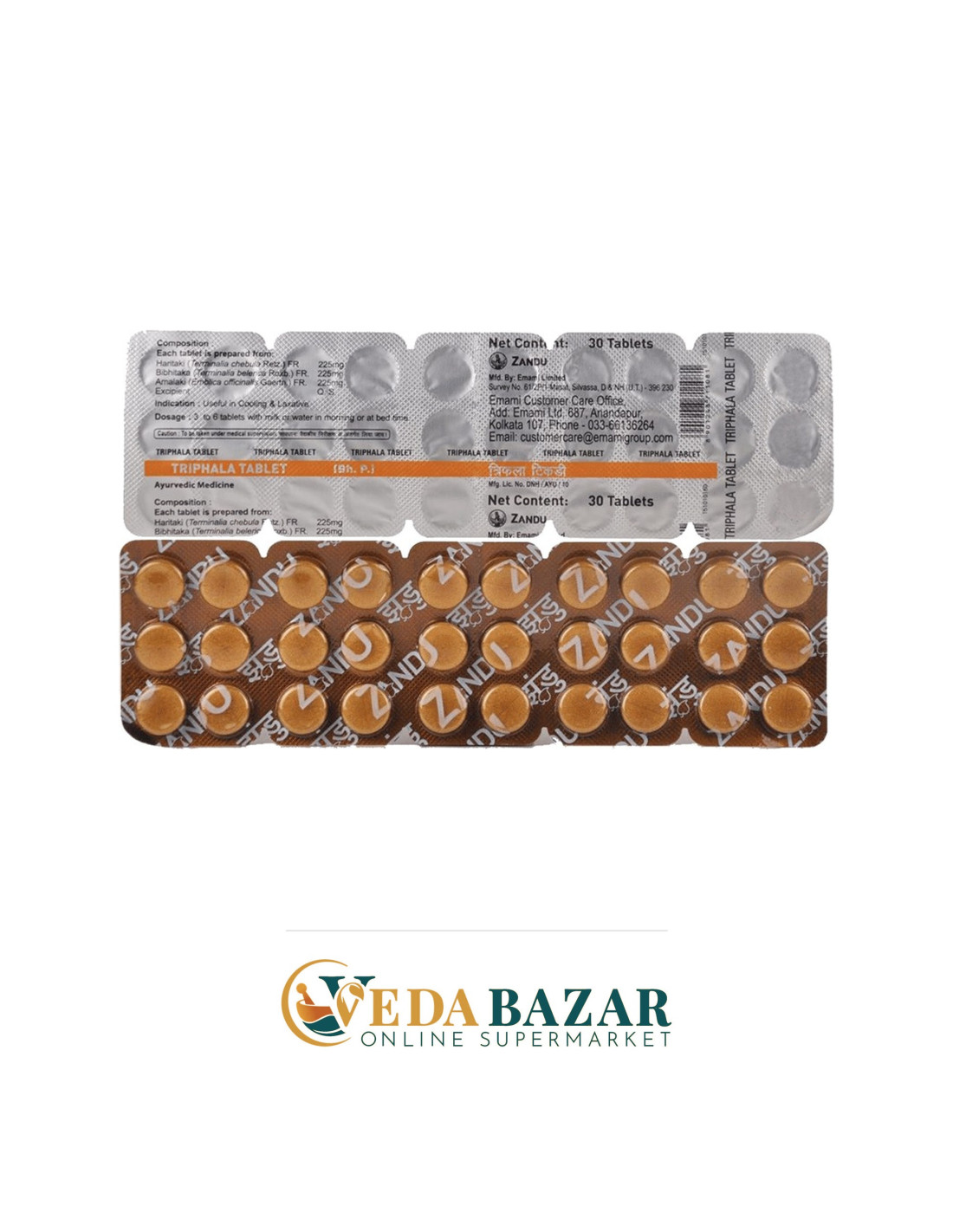 Triphala, 30 tablets 90 ₽ | 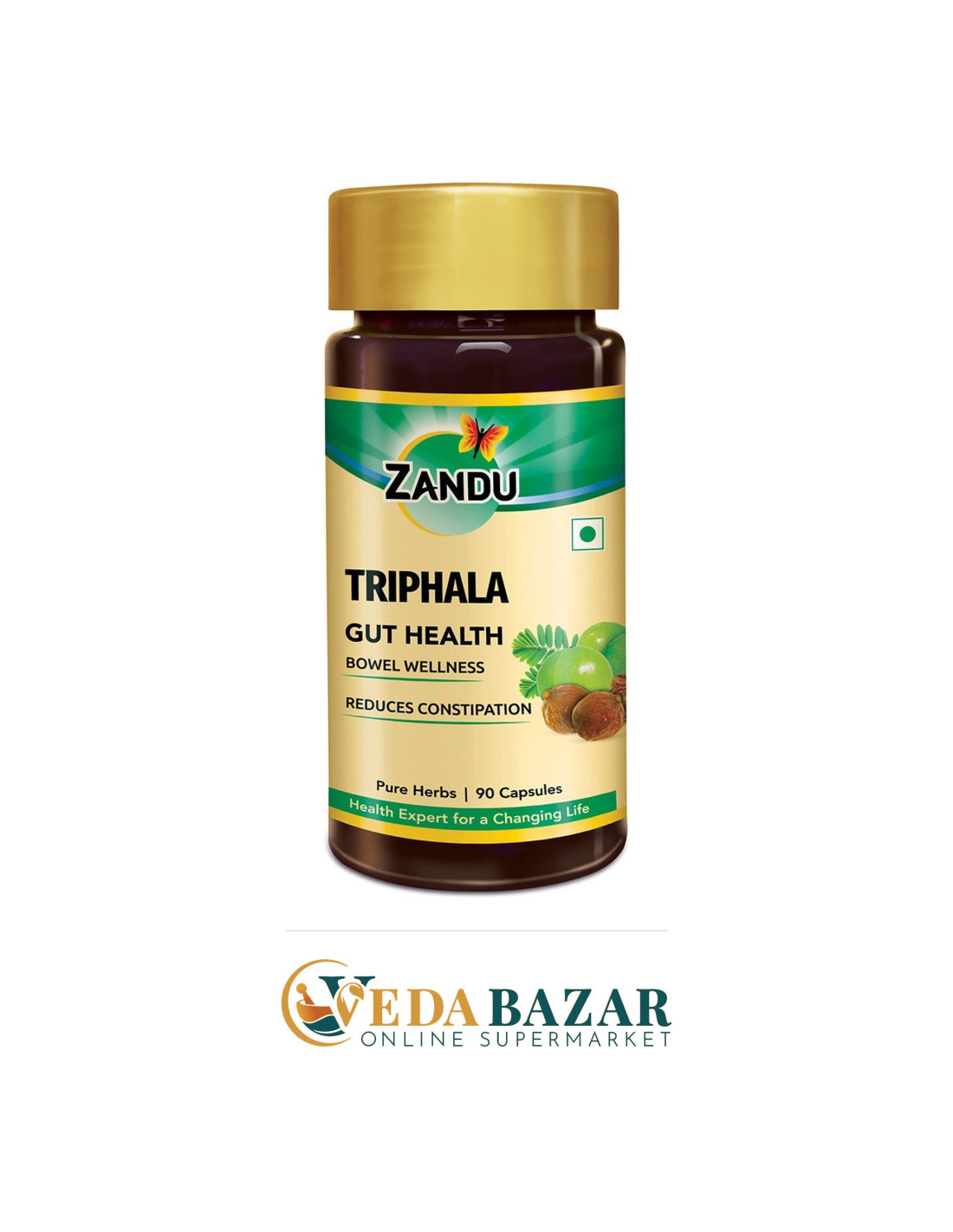 Triphala, 90 capsules 440 ₽ |
When the bowel is «stuck»: constipation and apana vata
In ayurveda constipation is most often Vata: dryness, cold and «stuck» air in the large intestine. A special part of Vata, apana vata, is responsible for downward movement. When it loses its rhythm, stools become rare and dry.
Nityam is Zandu’s gentle ayurvedic laxative: senna, haritaki, triphala, liquorice, fennel, black salt (sanchal), sarjika kshara and a little castor oil. The maker says Nityam helps with occasional constipation without cramps, and also with gas and bloating. It is taken at bedtime, so the bowel works more easily in the morning. It comes as tablets and as a churna – a powder stirred into a glass of water. The Good Gut Overnight Constipation Relief tablets are a similar eight-ingredient formula, also taken at night. According to the maker, neither is habit-forming. But a laxative is temporary help, not a replacement for warm food, water and routine. The maker does not recommend them during pregnancy.
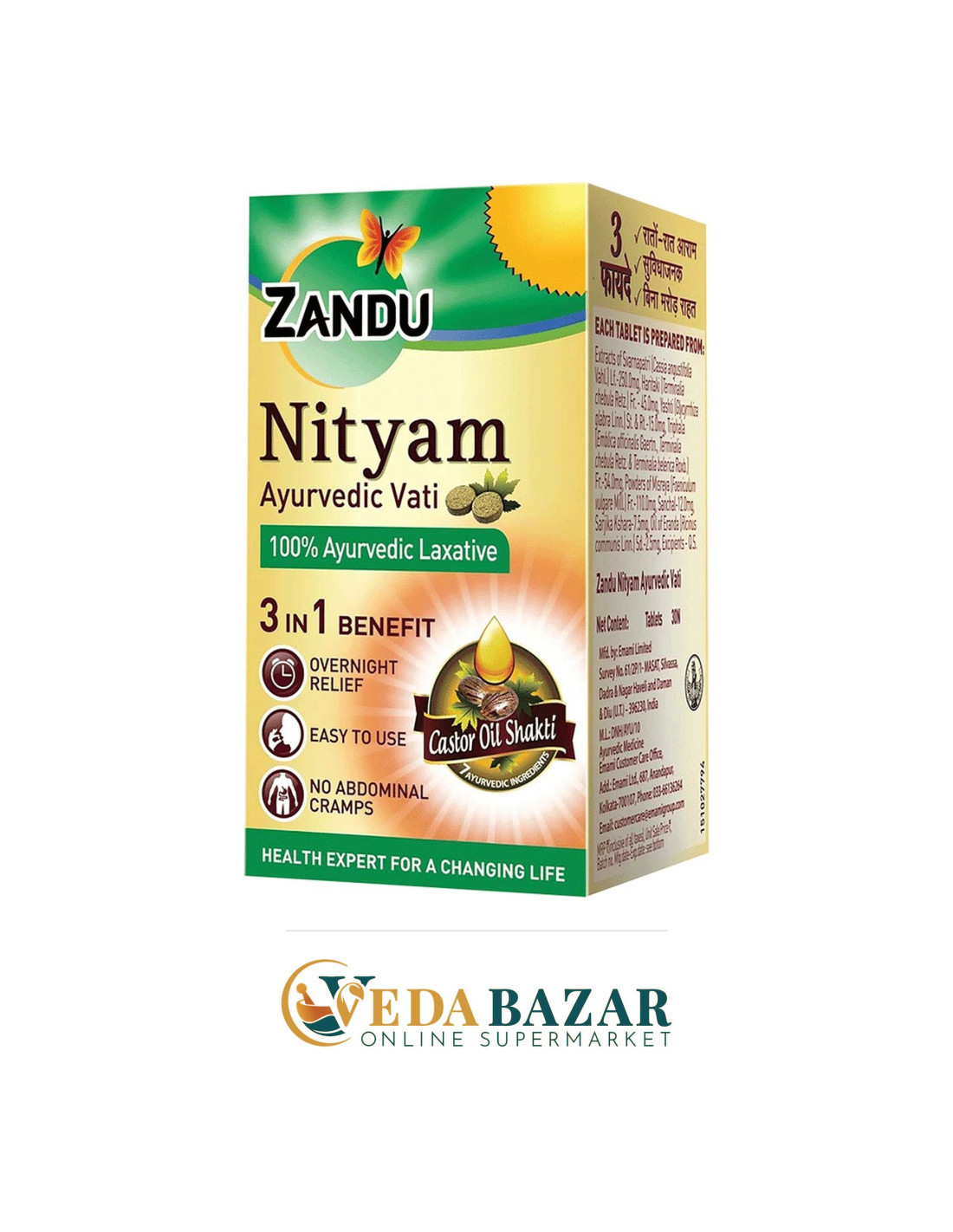 Nityam Vati, 30 tablets 180 ₽ | 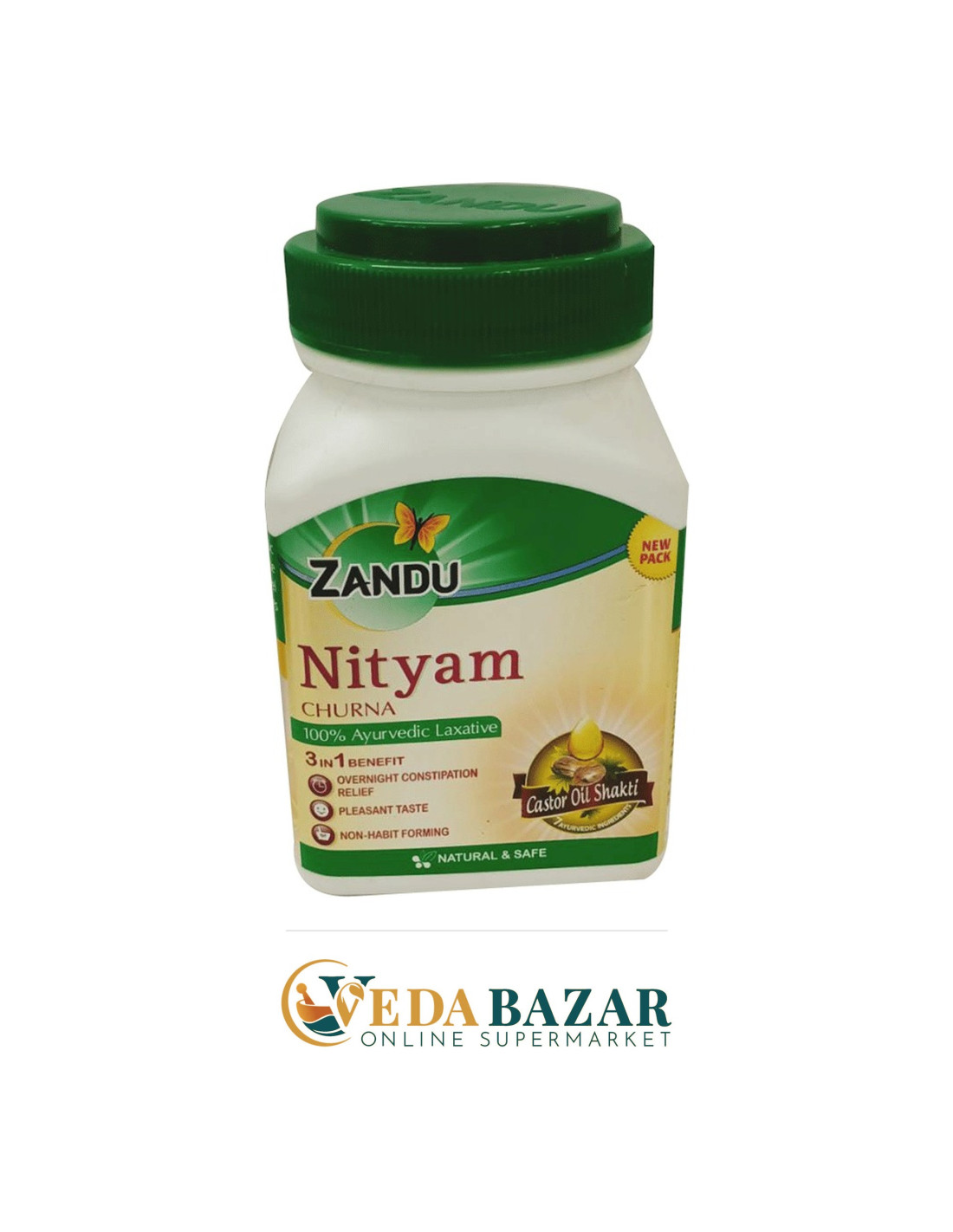 Nityam Churna, 50 g 90 ₽ |
 Overnight Constipation Relief, 30 tablets 410 ₽ |
Pancharishta: gas, bloating and acidity
Pancharishta is Zandu’s signature digestive tonic, one of the best known in India. It contains 35 herbs and spices: draksha (raisins), aloe, dashamoola, ashwagandha, shatavari, triphala, liquorice, trikatu, clove, ajwain and more. An arishta is an infusion that matures through natural fermentation. Such tonics gently kindle agni. The spices clear Vata gas and Kapha heaviness, while raisins, aloe and amla cool Pitta.
The maker calls Pancharishta a «30-day therapy for digestion»: the tonic is taken as 2 tablespoons with an equal amount of water after lunch and dinner, for at least 4 weeks. For those who find a bottle inconvenient to carry, there are Pancharishta tablets – one twice a day, a 30-day course.
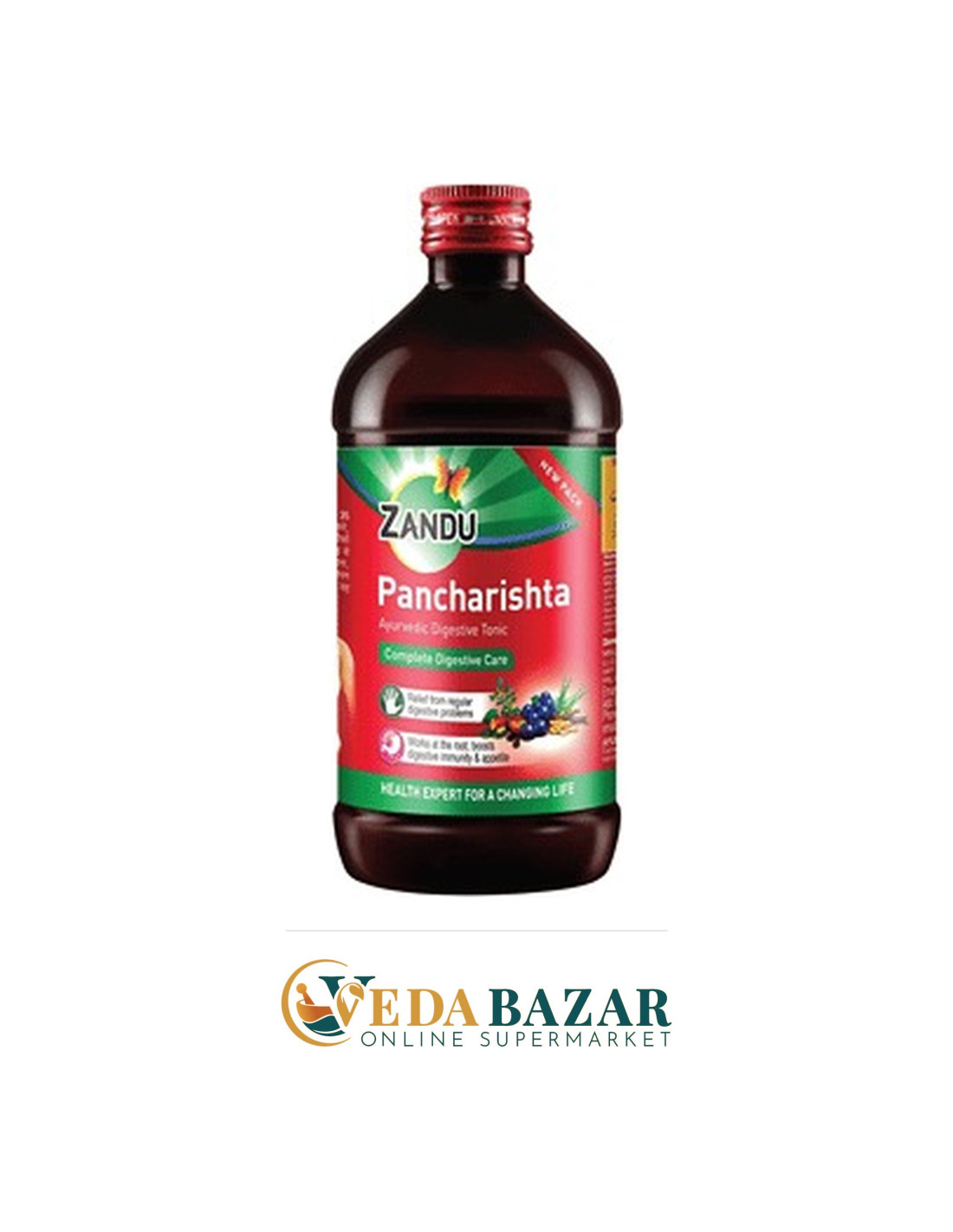 Pancharishta Tonic, 200 ml 120 ₽ | 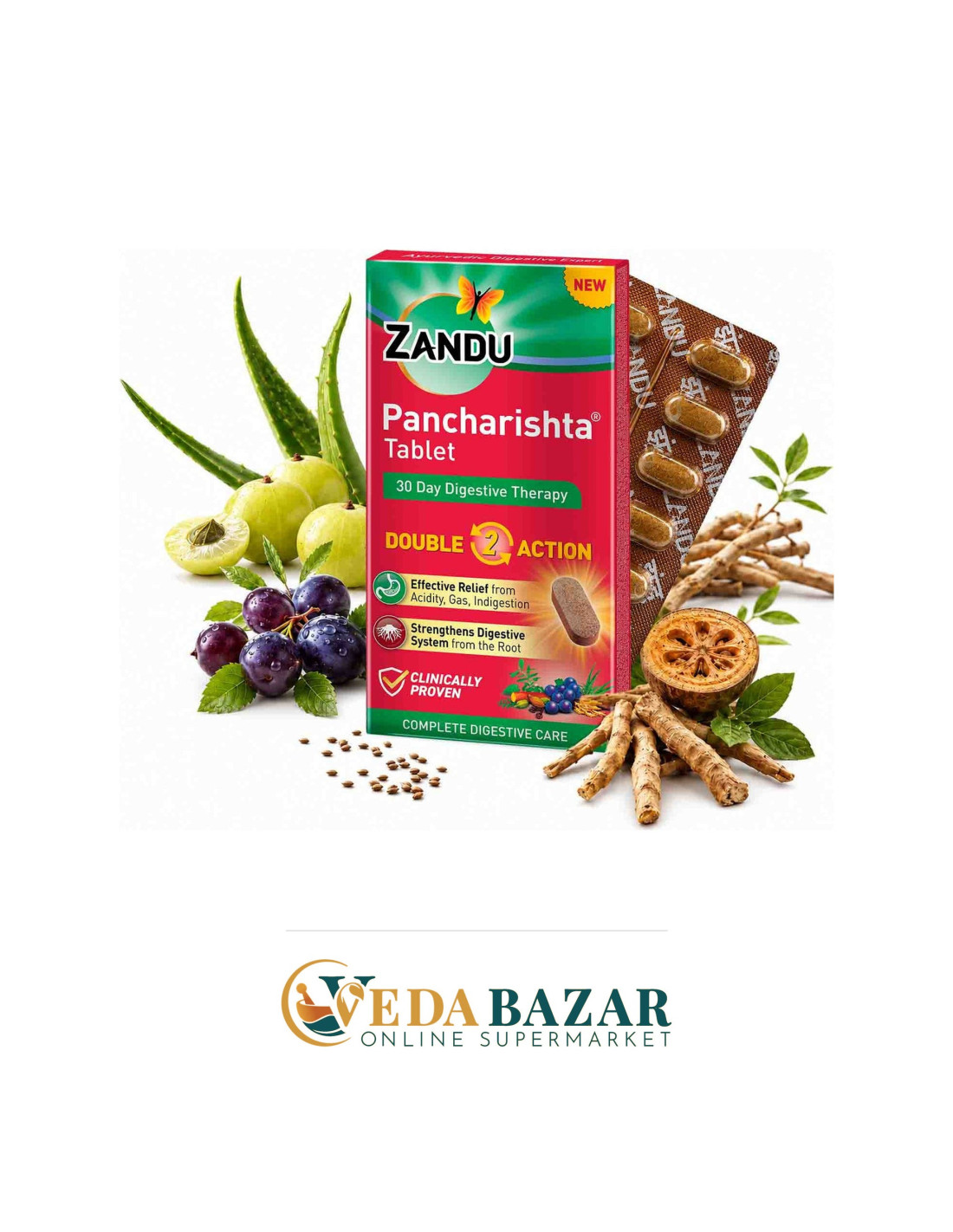 Pancharishta, 30 tablets 520 ₽ |
When it burns and bloats
Heartburn and a sour taste in the mouth are called amlapitta in ayurveda – an excess of hot, sharp Pitta in the stomach. The Good Gut Acidity and Bloating Relief tablets have two layers. One layer is mukta shukti bhasma, a pearl-oyster shell powder; the other is a liquorice extract. Shukti and liquorice are classical cooling remedies. A tablet is taken before lunch and dinner, and the maker recommends a full 45-day course.
If you bloat more than you burn, try the Ginger Celery tea. It is a caffeine-free herbal infusion: cumin, ginger, black pepper, pippali, clove, ajmoda seeds, mint and coriander. The maker says it helps with bloating, gas and heaviness after meals. Mint and coriander soften the heat, so this infusion is gentler than pure spices.
 Acidity & Bloating Relief, 30 tablets 560 ₽ | 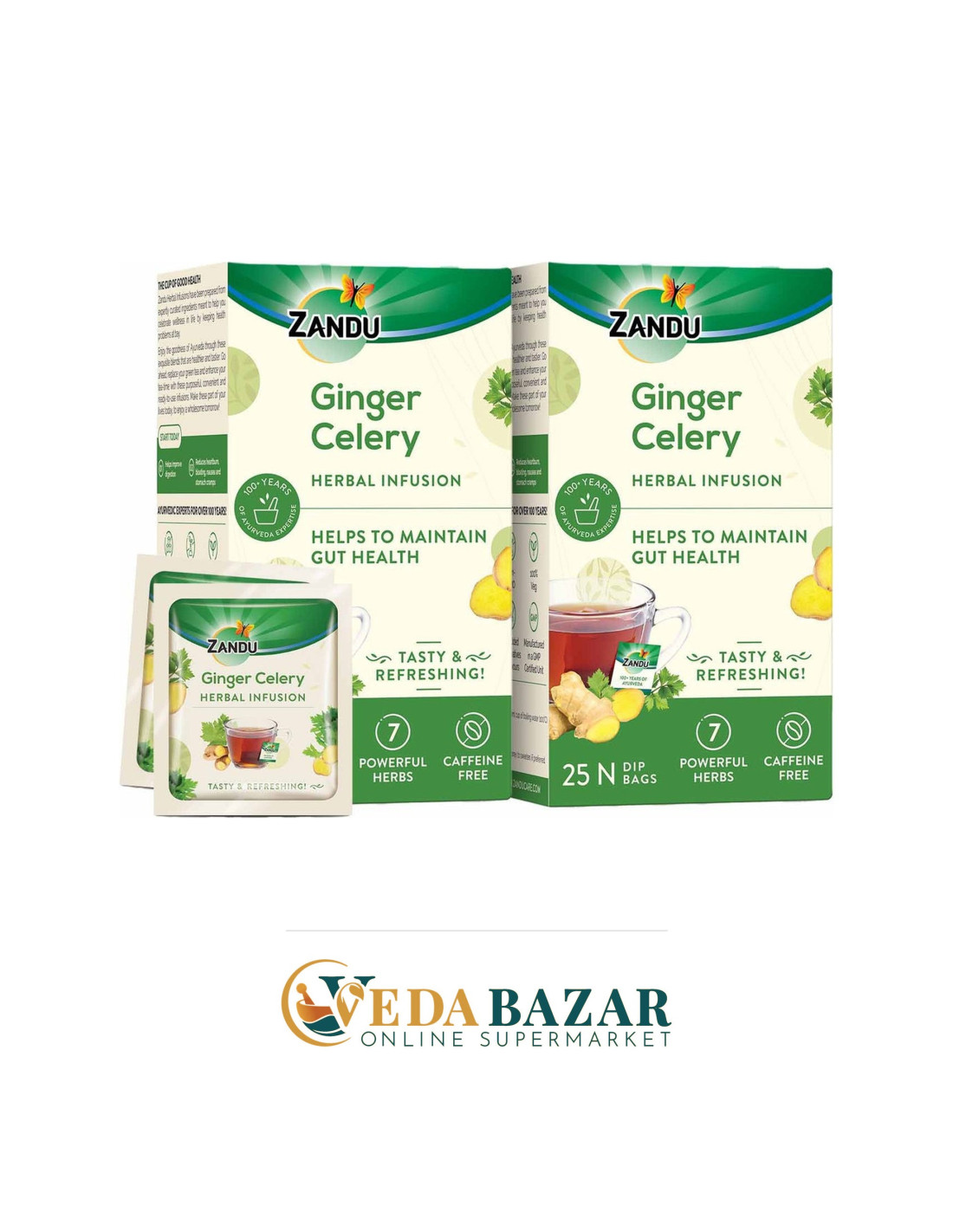 Ginger Celery Herbal Tea, 2 × 25 tea bags 690 ₽ |
Free gift
Brochure «Between leaf fall and snow»
Ayurvedic rituals for autumn and winter – morning, day and evening. Press the button and our Telegram bot will send it right away.
The liver: the home of Pitta
In ayurveda the liver is the seat of Pitta and of ranjaka agni, the fire that colours the blood. Fatty and fried food, late dinners and rushing are hard on it. Bitter herbs remove excess heat and cleanse the blood – that is why almost all liver remedies are bitter.
Kalmegh is called the «king of bitters». Each Zandu capsule holds 250 mg of pure extract. The maker says kalmegh supports the liver and bile flow and helps digestion. For Vata the bitterness can be too much, so it is taken as a course. Livital is a tablet of nine herbs: punarnava, bhringraj, kalmegh, katuka, bhumi amla, chicory, guduchi, rohitaka and vidanga. The maker says it suits people with irregular meals, stress and a fast pace of life: it protects liver cells and improves digestion and appetite. The course is 2 months. Livital Syrup is the same idea in liquid form, with a different set of 12 herbs. It is handy for those who do not like swallowing tablets.
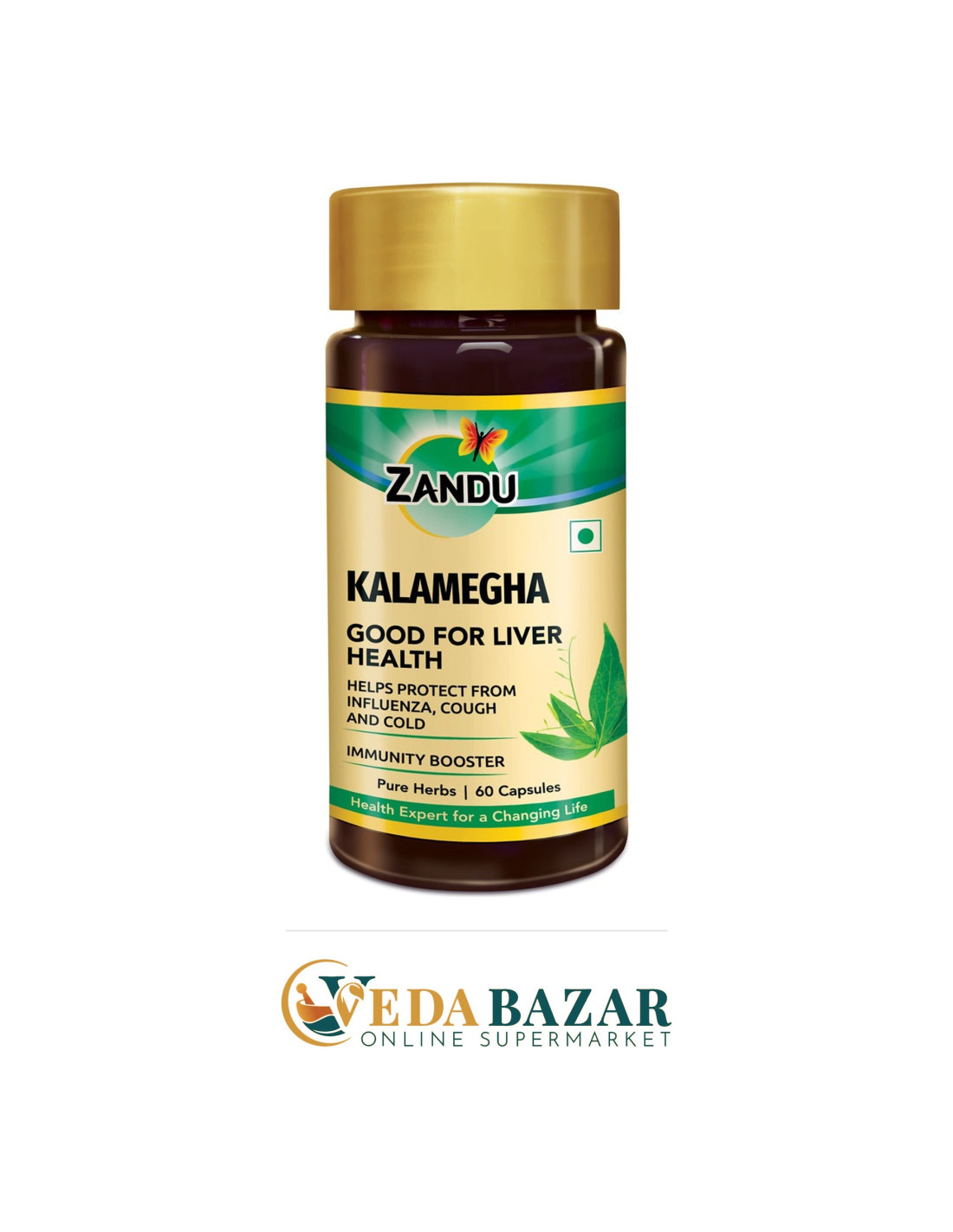 Kalmegh, 60 capsules 370 ₽ | 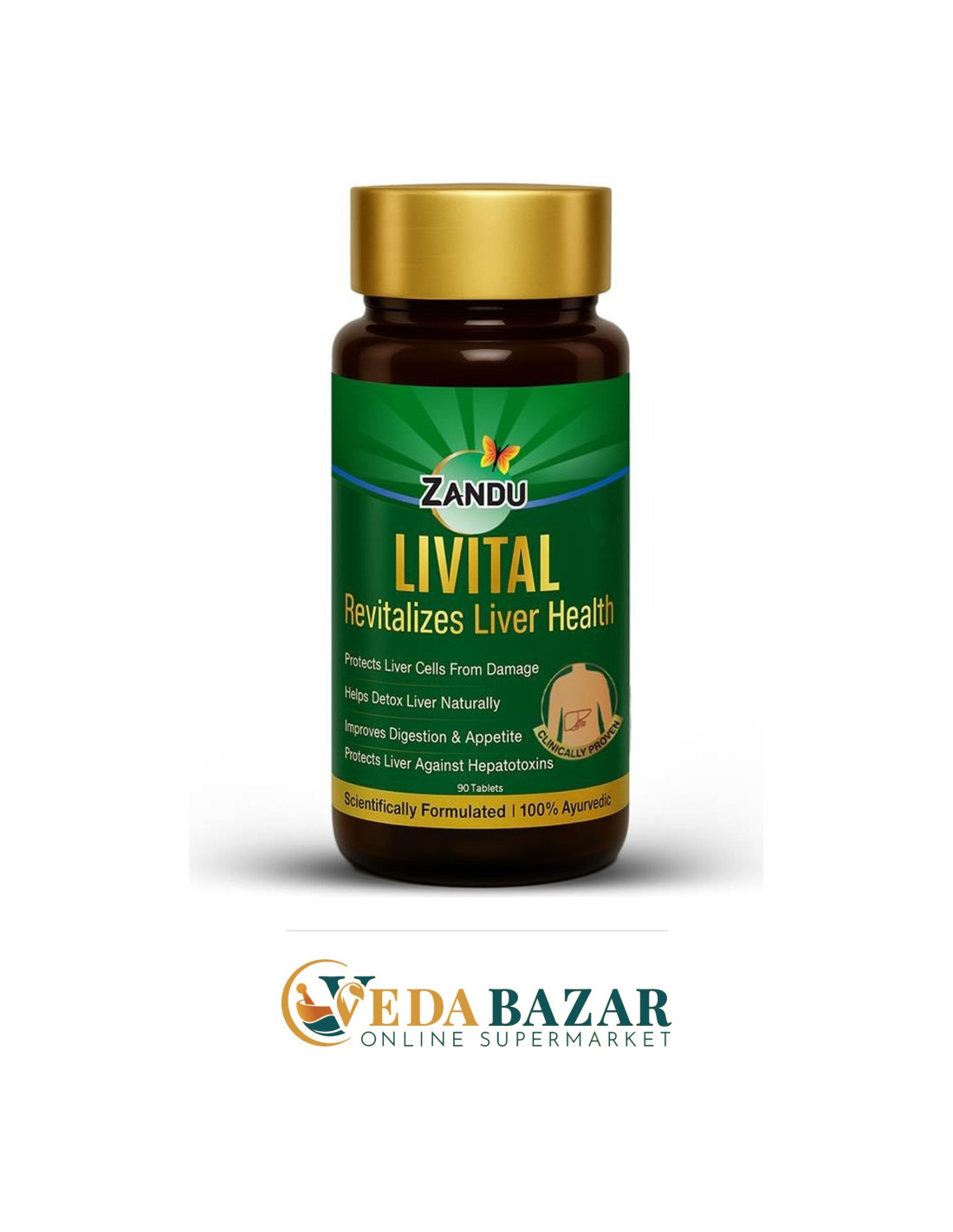 Livital, 90 tablets 490 ₽ |
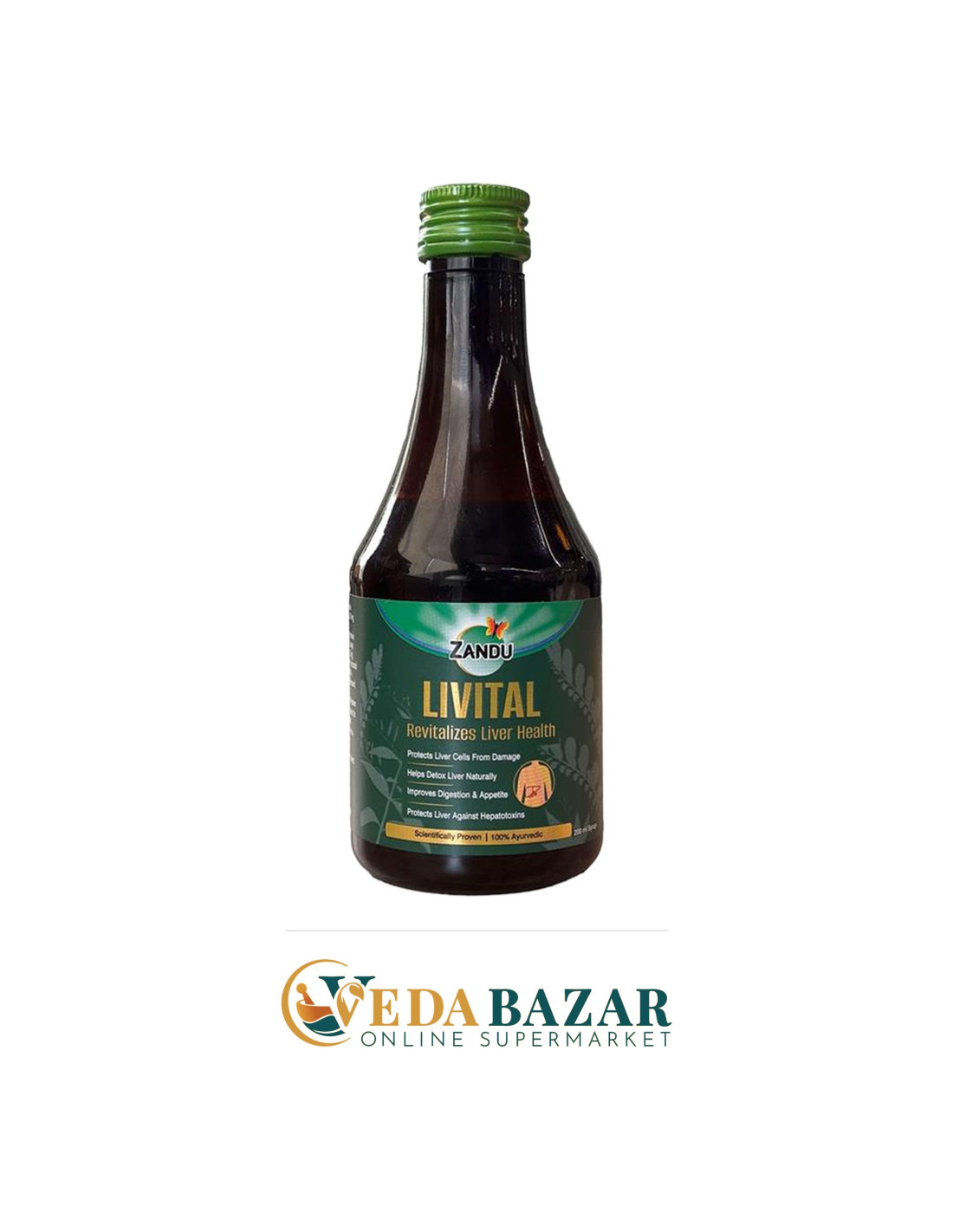 Livital Syrup, 200 ml 350 ₽ |
Gentle cleansing: punarnava and a herbal tea
Punarnava means «the one that renews again» in Sanskrit. It has long been used for the kidneys and urinary tract. The maker says the capsules support kidney function and gently increase urine flow, and also help the liver and digestion. They are taken at bedtime, 2 hours after the last meal. The Zandu Cleanse and Detox tea has eight herbs: punarnava, turmeric, liquorice, tulsi, pippali, amla, bhumyamalaki and chicory. No caffeine and no bitterness. It is a gentle helper; in ayurveda the main cleansing is light food and routine.
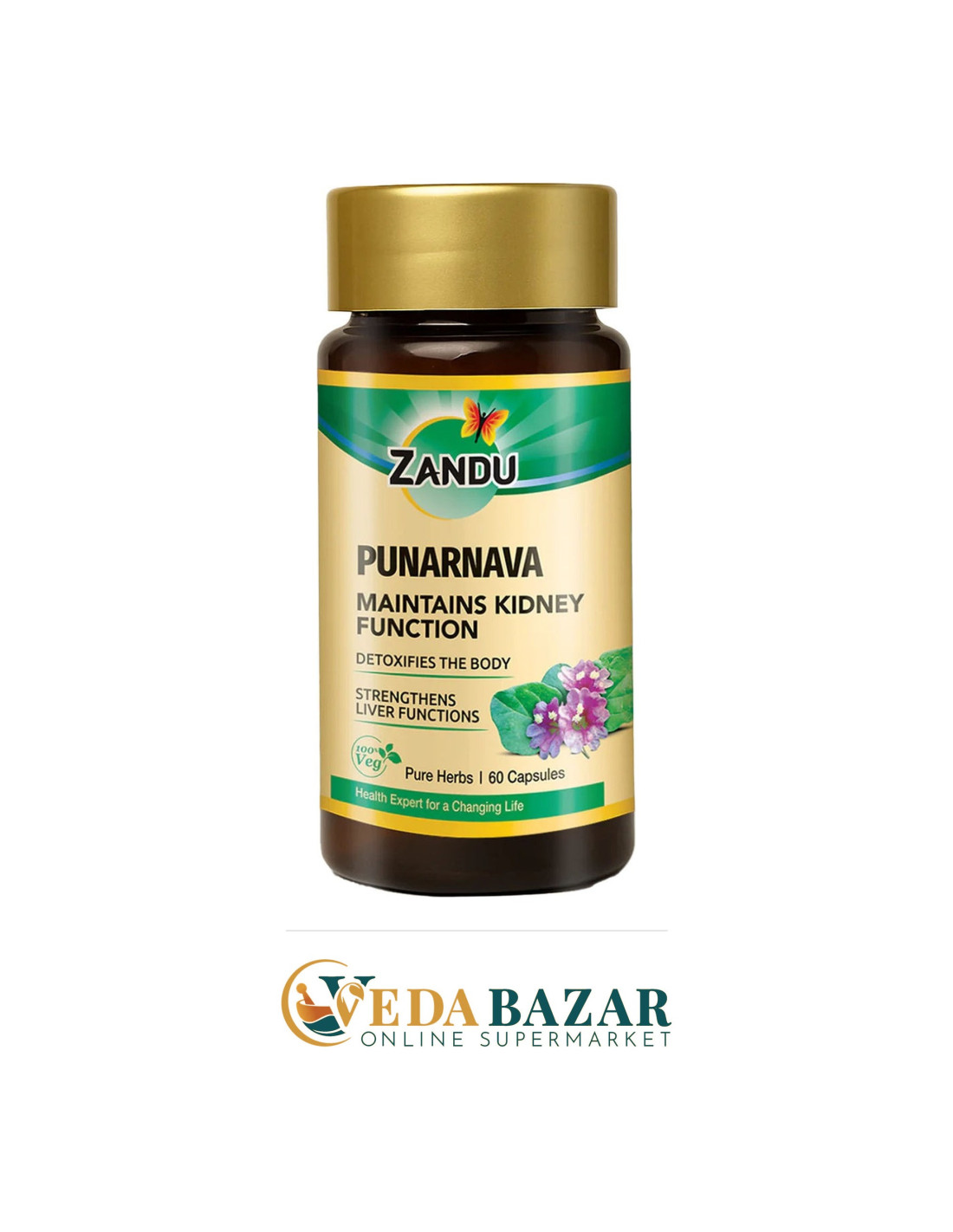 Punarnava, 60 capsules 370 ₽ | 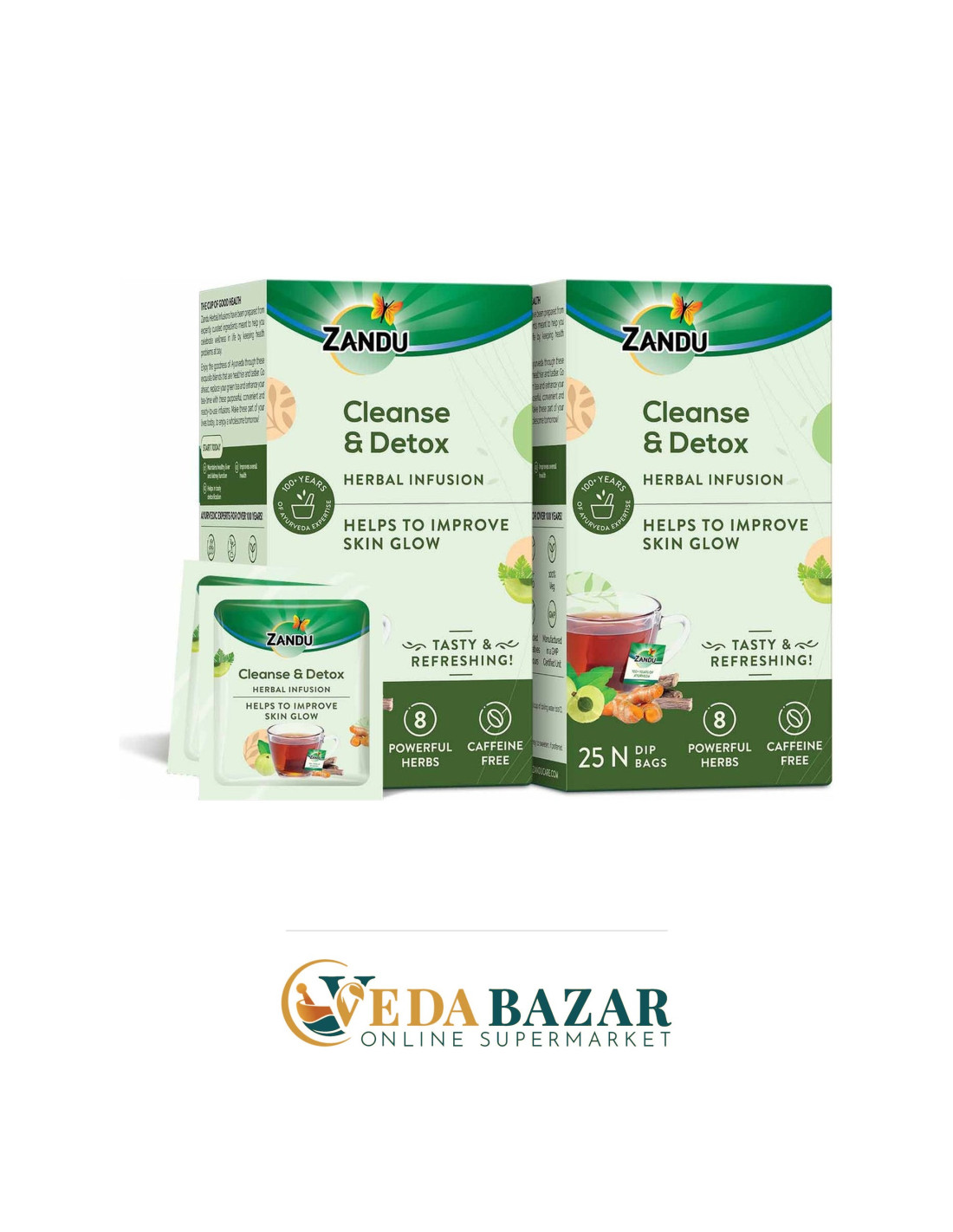 Cleanse & Detox Herbal Tea, 2 × 25 tea bags 830 ₽ |
How to choose for your dosha
If you are Vata – constipation, gas, dryness – choose Nityam, Triphala and the Ginger Celery tea. If you are Pitta – heartburn, burning, irritability – take the acidity tablets, Kalmegh and Livital. Pungent spiced teas are not for you right now. If you are Kapha – a slow fire, heaviness, sleepiness after meals – Pancharishta, Livital and Punarnava will suit you.
Simple habits for the belly
Drink a glass of warm water in the morning – the bowel will wake up more gently. Eat when you are hungry, not by the clock – the fire will have time to digest the last meal. Eat calmly, sitting down, without your phone – your body will hear the «enough» signal better. Do not lie down right after a meal – there will be less heartburn. Have an earlier, lighter dinner – there will be no coating on your tongue in the morning. Add a little ghee to your food – Vata loves softness, and stools will come more easily.
This is general information, not treatment. With severe abdominal pain, blood in the stool, diarrhoea, pregnancy or chronic illness, see a doctor first. Do not take laxatives for a long time without a break, and take herbal courses as prescribed by an ayurvedic doctor.
Ira Niroula, Ayurveda, prevention and longevity specialist.
Ingredients and directions – according to Zandu. This article is for information only and does not replace medical advice.
Comments (0)